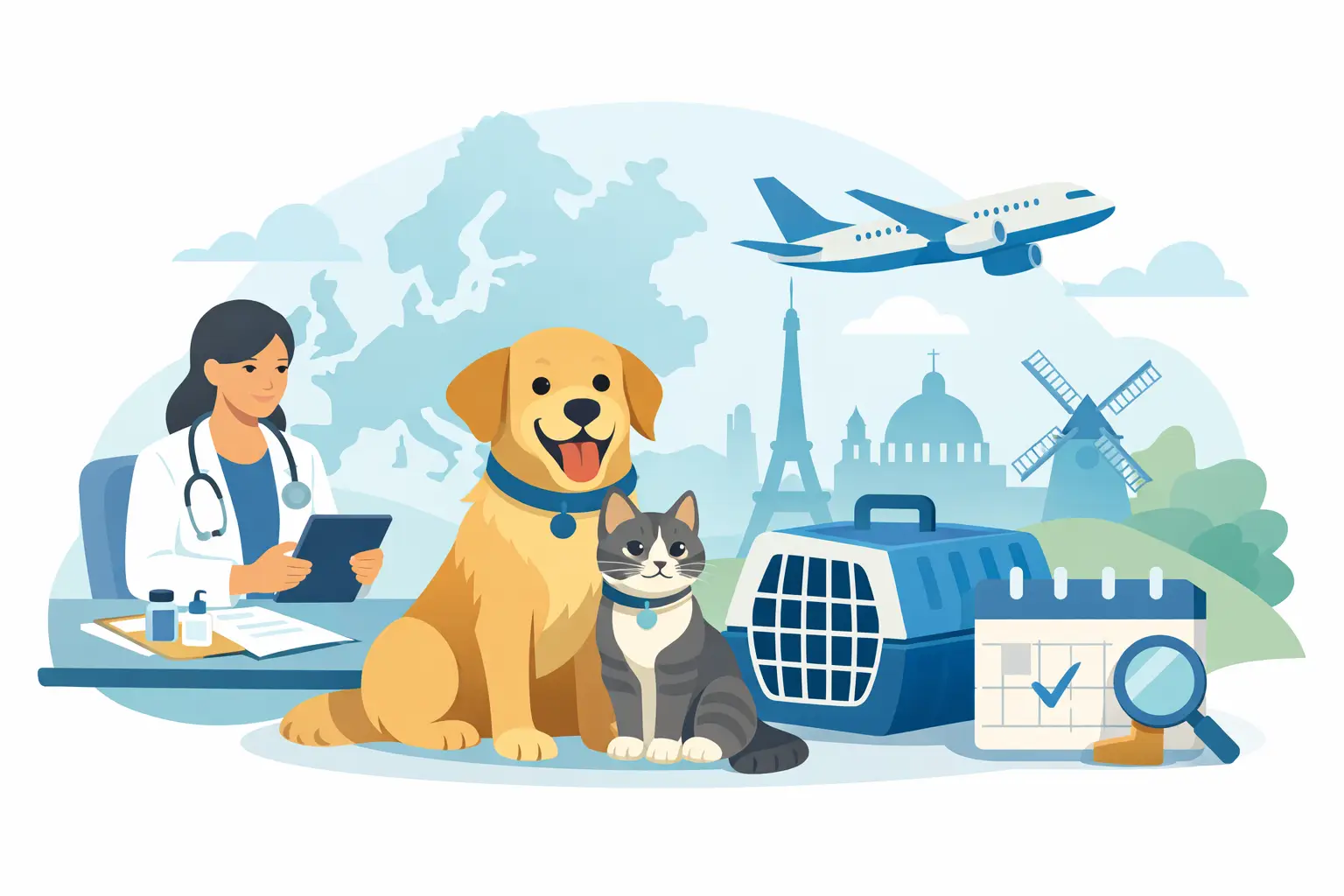
Pet Travel to Europe With an Animal Health Certificate
A missed certificate deadline can turn an excited pet into an unexpected stay-at-home companion. For pet travel to Europe from Great Britain, the practical work starts before you pack the lead, carrier or car boot. Your Animal Health Certificate must be correct, signed at the right time and with you when you reach the border.
The good news is that this is a clear process once you know the order of events. Start with your pet’s identification and rabies status, arrange your certificate appointment around your date of entry to the EU, then travel with the original completed document. A little forward planning removes most of the pressure.
Pet travel to Europe: the certificate you need
Most dogs, cats and ferrets travelling from Great Britain to an EU country need an Animal Health Certificate, usually called an AHC. This is the document issued for a specific journey after an Official Veterinarian has checked the relevant information and inspected your pet.
An AHC is not a document to buy at the last minute and put in a drawer for future holidays. It is normally valid for entry into the EU for 10 days from its date of issue. Once you have entered the EU, it can usually be used for onward travel within the EU and for return to Great Britain for six months. For another trip after that, you will generally need a new AHC.
The certificate is designed for non-commercial travel, such as taking your own pet on holiday, visiting family, travelling to a second home or moving temporarily. Different rules can apply if an animal is being sold, transferred to a new owner, or travelling in connection with a commercial arrangement. If that sounds like your journey, check the correct route before booking.
Check the essentials before choosing an appointment
Your pet’s microchip and rabies vaccination are the foundation of the AHC process. The microchip must be readable and should have been implanted before the rabies vaccination was given. The details on the vaccination record must match the microchip number exactly.
For a first rabies vaccination, pets must generally be at least 12 weeks old and wait 21 clear days after the vaccination before entering the EU. This waiting period catches out many first-time travellers, particularly families planning a puppy’s first holiday. A booster may avoid a new wait only if it is given while the existing rabies vaccination remains valid. If there has been a gap in cover, it may be treated as a new vaccination.
Check the original vaccination record early. Look closely at the microchip number, vaccination date, product details and expiry date. A spelling error in your surname or an unclear entry is far easier to resolve weeks before travel than when your ferry, flight or train is already booked.
You should also confirm that your destination is in scope for your planned route. The rules for travel from Great Britain to the EU are not always the same as those for Northern Ireland, non-EU European countries or journeys that involve changing countries outside the EU. Route details matter, not just the place where you are staying.
Work backwards from your EU entry date
The date that matters most is the date you enter the EU, not necessarily the date you leave home. If you are taking an overnight ferry, travelling through the Channel Tunnel or flying via another country, identify when and where you will first cross into the EU. Your AHC appointment needs to fall within the certificate’s 10-day entry window.
Booking early does not mean having the veterinary appointment too early. It means giving the administration team time to collect your pet and travel details, prepare the paperwork and arrange the most suitable appointment. The final inspection and Official Veterinarian sign-off must happen at the appropriate point before departure.
For a straightforward holiday, a standard appointment may suit you well. If you have a fixed departure approaching, an urgent option can be useful where availability allows. Repeat travellers should still plan each trip separately, because every new journey needs its own certificate and the travel dates will drive the appointment timing.
Avoid relying on a date you hope will work. Give the exact departure date, intended EU entry date, destination and travel method when you book. If your route changes, say so promptly. A certificate prepared for the wrong itinerary can create unnecessary delay.
What happens during the AHC process
The process should feel organised rather than clinical and complicated. First, you provide the required pet, owner and travel information, along with clear copies of the relevant vaccination evidence. The administrative paperwork can then be prepared ahead of the appointment.
At the arranged appointment, an independent veterinary surgeon and Official Veterinarian checks your pet, verifies the supporting records and signs the certificate where everything is in order. You receive the completed original document to take on your journey. Keep it protected, accessible and separate from luggage that may be checked in.
Alongside checking the records and microchip, the vet will inspect your pet to check for visible signs of infectious disease. Having the owner present with the pet helps the appointment run smoothly and is our preferred arrangement.
Vet Home Certs is set up around this sequence: collect the details, prepare the AHC paperwork and coordinate the final veterinary check and sign-off. That specialist focus can be particularly helpful when your usual practice has limited appointment availability or when you want a process built around travel documentation rather than general veterinary care.
The right appointment format depends on your circumstances. A collection-point appointment can be a practical value option if you are happy to travel locally. A home visit may be worth considering for owners with several pets, limited mobility, a nervous animal or a tight household schedule. Home delivery arrangements can also make the final stages more convenient, but allow enough time for the option you select.
Do not forget the journey home
An AHC can support your return to Great Britain within its period of validity, provided the journey remains within the conditions of the certificate. However, your return arrangements may have separate requirements. In particular, dogs returning to Great Britain from many European destinations need tapeworm treatment recorded by a vet between 24 and 120 hours before arrival.
There are route-specific exceptions, so do not assume that a treatment needed for one trip will be needed for every trip. Work backwards from your scheduled arrival in Great Britain and arrange the treatment in the country you are visiting if it applies. Keep the original treatment record with your AHC.
Carrier rules are separate from border paperwork. Airlines may have restrictions on carrier size, pet weight, cabin travel and booking deadlines. Ferry and rail operators can set their own check-in procedures and vehicle rules. Your AHC may be perfect, but you still need to meet the requirements of the company carrying you.
A practical travel-day check
Before leaving, place the original AHC and vaccination evidence in a waterproof folder you can reach quickly. Check that the microchip can be scanned, that your pet’s collar or harness carries current contact details, and that you have food, water and any prescribed medication for delays.
For car journeys, plan comfort stops that are safe and realistic. For air travel, follow the airline’s instructions on carrier preparation and arrival times. A calm journey is partly about paperwork, but it is also about not trying to solve every small practical issue at the departure terminal.
Rules can change, and some destinations or itineraries have additional conditions. Check the current official requirements for your destination before travel, especially if you are travelling with more than five pets, visiting a non-EU country en route or planning a longer stay.
Your pet does not know there is an AHC deadline. They only know you are going somewhere together. Book the certification process early enough to give yourself choices, then let the final days before departure be about the journey rather than the paperwork.