Best Pet Travel Appointment Options for EU Trips
A ferry crossing, early flight or long drive through France can be easy to plan. The part that often causes last-minute stress is getting the Animal Health Certificate signed at the right time. The best pet travel appointment options are the ones that fit your departure date, your pet’s needs and the strict timing rules for EU travel – without leaving paperwork until the final day.
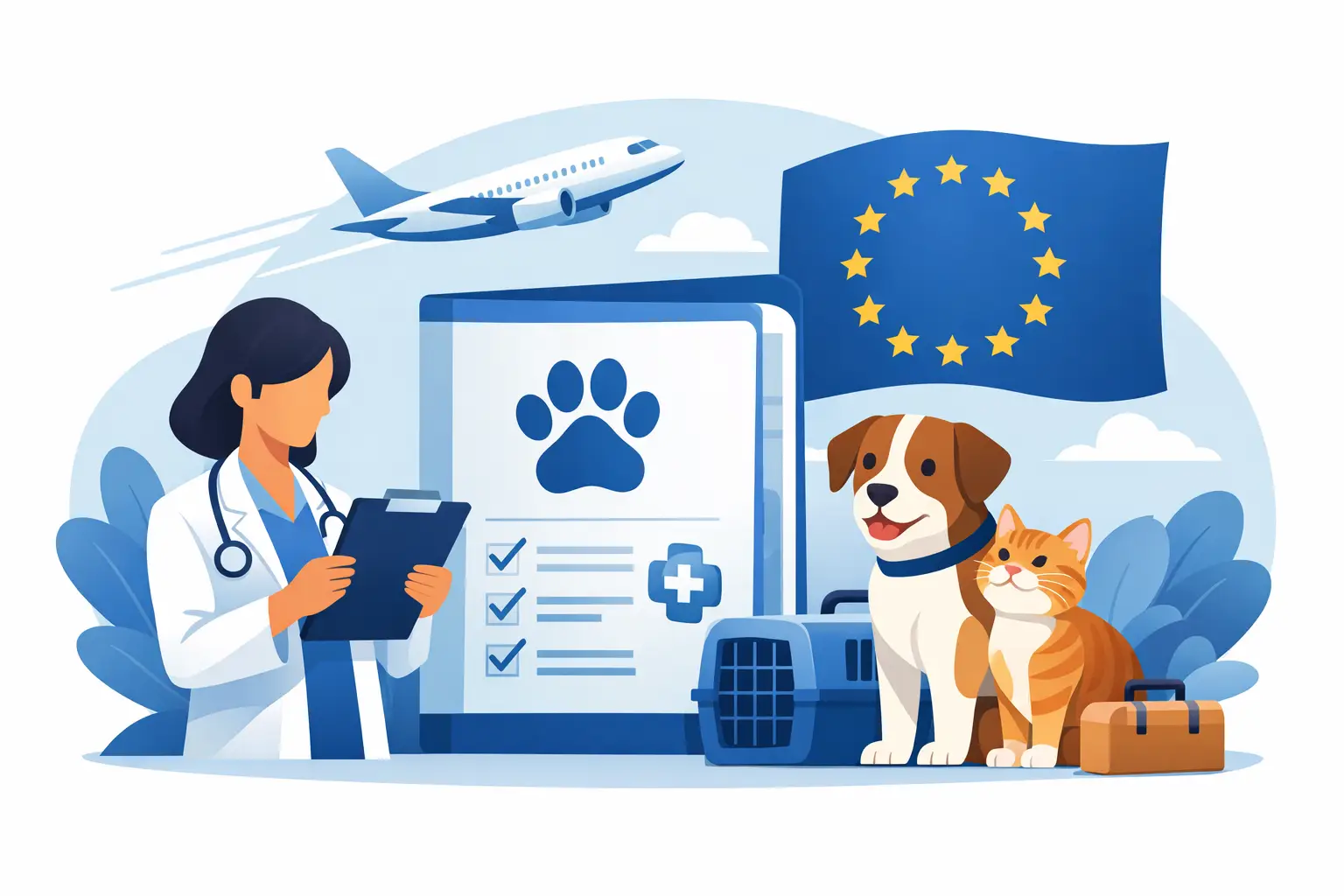
For most dogs, cats and eligible pets travelling from Great Britain to the EU, an Animal Health Certificate (AHC) must be issued by an Official Veterinarian no more than 10 days before entry into the EU. That timing window makes the type of appointment you choose more than a matter of convenience. It affects how much time there is to prepare documents, correct missing information and travel with confidence.
Best pet travel appointment options for your journey
There is no single right appointment for every traveller. A family heading to Spain for a fortnight, a frequent traveller taking the ferry to France and an owner relocating temporarily to Europe may all need an AHC, but their booking priorities can be very different.
The most practical choice usually comes down to four things: how soon you are travelling, whether you have travelled with your pet recently, where you can attend an appointment and how much flexibility you need around work, children or your travel route.
Standard AHC appointments
A standard appointment is usually the best fit when your travel date is known well in advance and you have enough time to submit your details before the veterinary check. You provide the required pet, owner and journey information, the administration team prepares the certificate, and an Official Veterinarian carries out the final inspection and sign-off at the arranged appointment.
The in-person appointment also allows the vet to inspect your pet and confirm that no signs of infectious disease are apparent. Having the owner present with the pet helps the appointment run smoothly and is our preferred arrangement.
This route gives the paperwork time to be checked before you attend. That matters because a small mismatch can cause a larger problem later. Your pet’s microchip number, rabies vaccination record, passport details where relevant, owner details and destination information all need to be accurate.
A standard booking is generally the most straightforward and price-conscious option. It is particularly suitable for holiday travel where flights, ferries or accommodation have already been booked and there is still time to plan the certificate around the 10-day window.
Repeat appointments for regular EU travellers
If you have used an AHC service before and your core details have not changed, a repeat appointment can reduce the administrative work involved before each trip. This can be useful for owners with second homes in Europe, people who travel regularly for work, or families who make frequent short breaks across the Channel.
Repeat does not mean no checks are needed. Each new journey requires a new AHC, and the certificate must still be prepared for the specific trip and signed by an Official Veterinarian within the required period. Your travel dates, country of entry, destination and pet’s records still need reviewing.
The advantage is familiarity. The booking process can be quicker when the service already understands your usual travel pattern and the details held remain correct. It is still wise to check every field carefully, especially if you have moved house, renewed a rabies vaccination, changed your ferry route or added another pet to the journey.
Urgent AHC appointments
Urgent appointments exist for a reason: travel plans change. A work request may come through late, a family situation may require a quick journey, or you may discover close to departure that your usual practice cannot provide an AHC in time.
An urgent route can be the right answer when the date is tight, but it depends on appointment capacity, the time available to prepare the paperwork and whether your documents are ready. It should not be treated as a substitute for checking requirements. A missing rabies vaccination record or incorrect microchip detail cannot be solved simply by booking a faster slot.
If you need an urgent appointment, act as soon as you know you are travelling. Submit clear photographs or scans of the requested documents, give exact travel details and be available to answer questions promptly. Fast administration works best when the information supplied is complete from the start.
Urgent bookings may cost more than a standard route because they require priority handling and reduced preparation time. For many owners, that trade-off is worthwhile when the alternative is rearranging a journey or leaving a pet behind.
Home-visit appointments
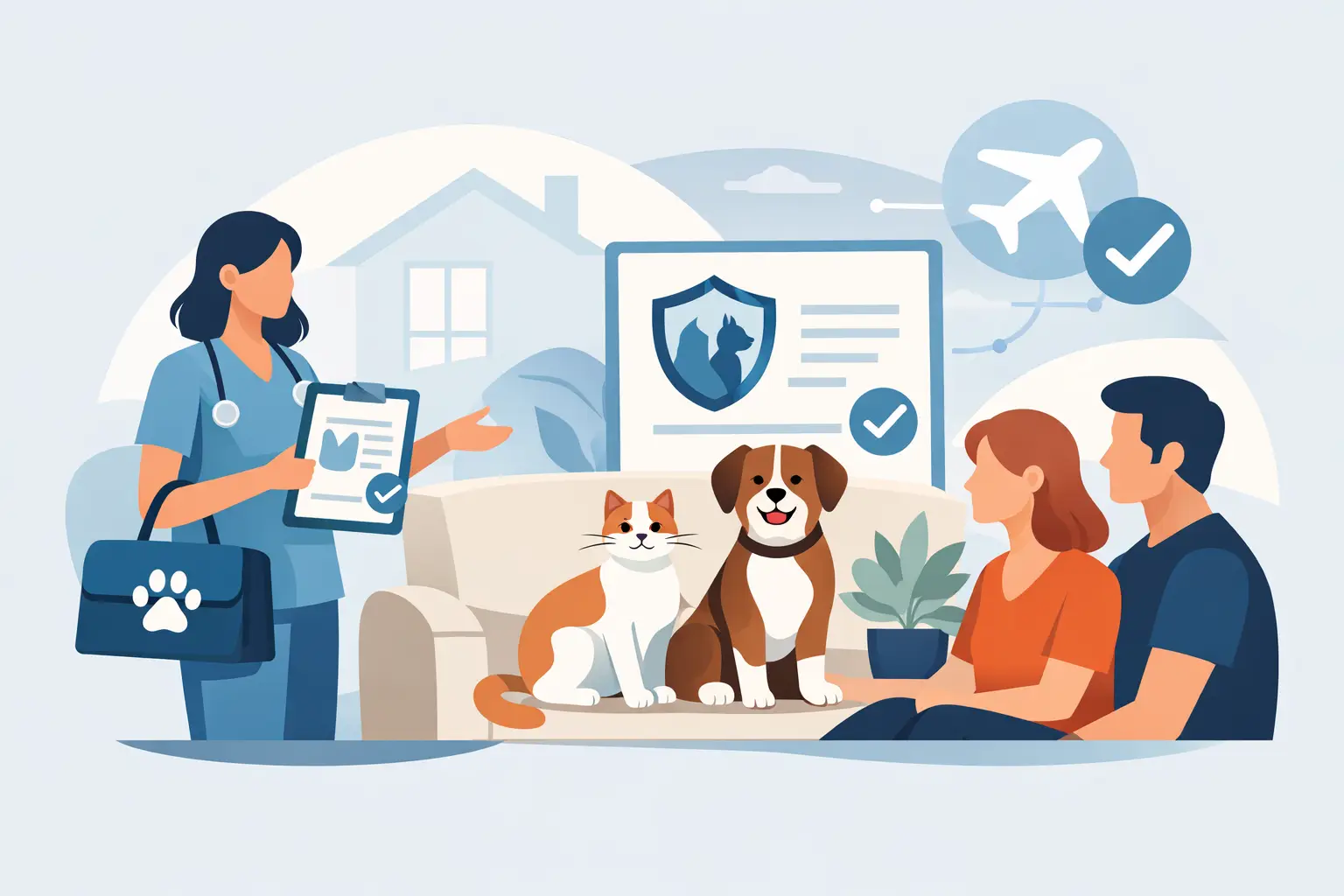
A home visit can make a real difference for pets who find clinic environments difficult, owners with limited mobility, households with several animals or families trying to manage a busy departure week. Instead of fitting your pet into a waiting-room appointment, the final inspection and sign-off are arranged at your home where service availability allows.
For anxious pets, familiar surroundings may make the check calmer. It can also be a practical option when you are preparing a car for a European road trip and do not want to add another journey across town to an already busy to-do list.
The trade-off is that home visits usually need more coordination than a collection-point appointment. Availability can vary by location, route planning and travel date, and there may be an additional charge to reflect the vet’s travel time. If convenience at home is your priority, book early enough to give the team the best chance of arranging it.
Collection-point appointments
Collection-point appointments offer a middle ground between visiting a traditional veterinary practice and arranging a home visit. They are designed to give owners a convenient local place to meet the veterinary professional for the final check and certificate sign-off.
This can suit owners who want a predictable appointment location, live near a service point or are happy to travel a short distance for a lower-cost option than a home visit. It may also be helpful if you are working through the day and can choose an appointment close to your commute or planned travel route.
Availability varies across the service area, so it is sensible to look at location alongside timing. An appointment that is technically nearby but only available after your planned departure will not help. The best choice is one that leaves enough room before travel for collection and a final check of the completed certificate.
How to choose the right appointment timing
The most common mistake is counting back from the date you leave home, rather than the date you enter the EU. If you are driving to Dover the day before a ferry, for example, the relevant timing is linked to your EU entry, not simply when you set off from your driveway.
Aim to arrange the appointment early enough within the 10-day period to allow for normal travel plans, but not so early that the certificate falls outside its valid entry window. Your exact itinerary matters. A direct flight, an overnight ferry and a multi-stage road journey can all have different practical deadlines.
You should also allow time before the appointment for administration. AHCs are not forms that should be completed from memory in a waiting room. The documents need to reflect your pet’s records and journey accurately before the Official Veterinarian inspects the pet and signs the certificate.
What to have ready before you book
Having the right information ready is often the difference between a calm booking and a stressful one. You will normally need your pet’s microchip and rabies vaccination details, owner information, travel date, EU entry country, destination and transport plans. If another person is travelling with the pet, or the pet is travelling within the rules for an authorised person, share that information at the start.
If an authorised person will accompany your pet instead of you, let us know in advance. You must show the vet proof that the owner’s journey takes place no more than five days before or after the pet travels. The required authorisation template is available to download in Stage 2, in the language of the first country your pet will enter. An authorised person coming to the appointment without the owner must bring the owner-signed letter; when the owner attends, the vet brings the letter for them to sign. Either the owner or the authorised person travelling with the pet may sign the AHC at the appointment; please confirm who will sign beforehand.
Check the microchip number character by character against the vaccination record. Also make sure the rabies vaccination is valid for the planned date of EU entry. A certificate cannot correct a vaccination that is not valid, and some first vaccinations require a waiting period before travel is allowed.
If you are taking more than one pet, say so when booking. Multiple pets can change the preparation required and the appointment length needed. The same applies if your plans include a return journey, onward travel to another country or transport by a route that has its own check-in deadlines.
Why specialist AHC appointments can save time
A general veterinary practice has to balance clinical care, emergencies, vaccinations, operations and routine appointments. Pet travel certificates are only one part of that work. A specialist service is built around the administrative sequence that AHC travel requires: collecting information, preparing paperwork, arranging the veterinary inspection and completing sign-off.
That focus is useful when you need clarity rather than a vague instruction to call back later. Vet Home Certs provides repeat, standard and urgent AHC routes, with collection-point, home-visit and delivery arrangements available where suitable. The aim is not to make the legal requirements disappear, but to make completing them feel organised and manageable.
The lowest-priced option is not always the best value if it involves chasing availability, travelling far from home or risking a rushed document check. Equally, a home visit may be unnecessary if a well-timed collection-point appointment is close by. Choose the format that gives you enough preparation time and the least disruption for you and your pet.
Before you pack the lead, travel bowl and favourite blanket, confirm the EU entry date, gather your records and choose an appointment that works backwards from the deadline. A prepared certificate and a calm pet make the journey to the port, airport or station feel much more like the start of your trip.