Animal Health Certificate for EU Pet Travel
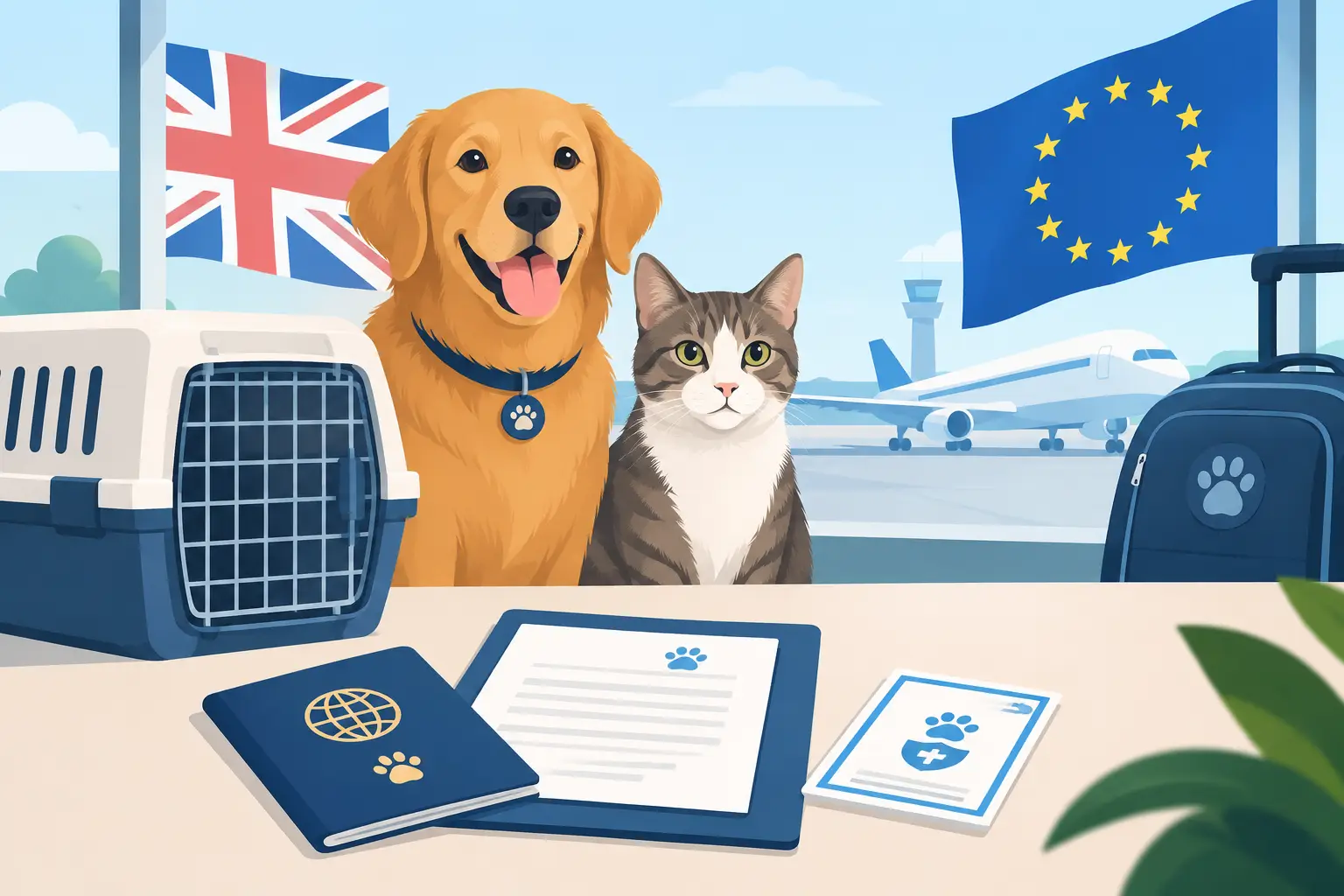
The ferry, flight or Eurotunnel crossing may be booked, but your pet cannot travel until the paperwork is right. An animal health certificate is the key document for most pets travelling from Great Britain to the EU, and it has a strict issue window. Getting organised early means you can focus on the journey ahead rather than chasing appointments in the days before departure.
For many owners, the difficulty is not the veterinary check itself. It is knowing which details matter, when the certificate can be issued and how to make sure every date, microchip number and travel plan lines up. The process is manageable when it is handled in the right order.
What is an animal health certificate?
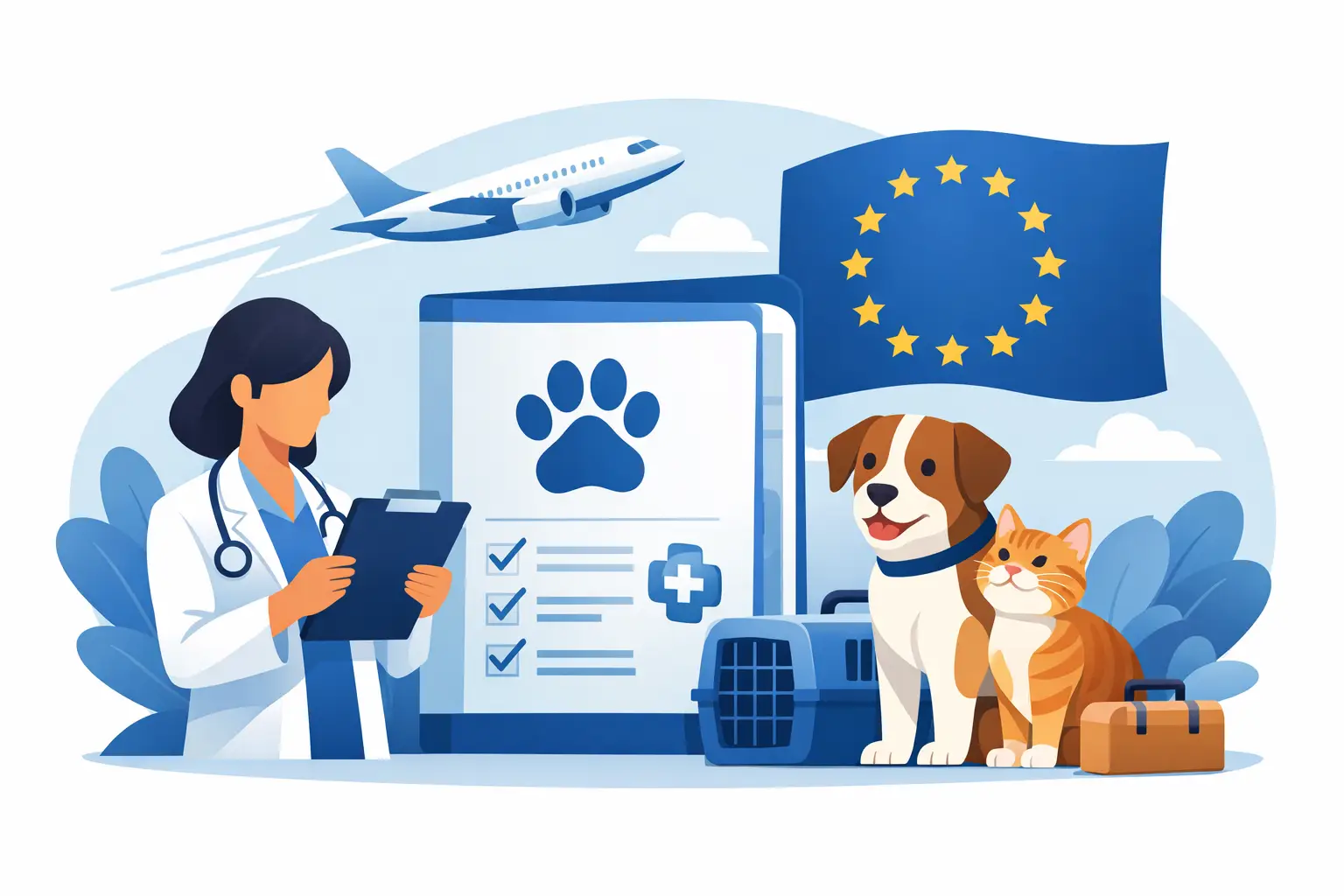
An Animal Health Certificate, usually called an AHC, is an official document that allows an eligible dog, cat or ferret to travel from Great Britain into the European Union. It is completed and signed by an Official Veterinarian after they have checked that your pet meets the relevant travel requirements.
For a standard non-commercial trip, the AHC records your pet’s identity, microchip and rabies vaccination details, as well as your travel information and ownership declaration. Border officials use it to confirm that your pet is eligible to enter the EU.
A new AHC is generally needed for each trip from Great Britain to the EU. It is not a replacement for ongoing veterinary care, and it is not something to leave until the last minute. While the document is normally valid for entry into the EU for 10 days from the date it is issued, the appointment, preparation and sign-off all need to happen before you travel.
Once used for EU entry, an AHC can usually cover onward travel within the EU and your return to Great Britain for up to six months from its issue date. That can be useful for a longer holiday, a stay at a second home or a multi-country road trip. However, if you leave Great Britain again after returning, you will normally need another certificate.
Check your pet’s travel position before booking
The first practical check is your pet’s microchip. It must be readable, and it must have been implanted before the rabies vaccination used for travel. The microchip number on the vaccination record must match exactly. A single wrong digit can prevent the certificate being issued.
Your pet also needs a valid rabies vaccination. For a first rabies vaccination, there is normally a 21-day wait before travel is permitted. This catches out owners who have booked a short-notice break and assumed a vaccination can be done the day before. Booster vaccinations are different: if the booster was given before the previous vaccination expired, the 21-day wait does not usually apply. The dates still need checking carefully.
An EU pet passport issued in Great Britain is no longer generally valid for travel from Great Britain to the EU. Some pets hold a valid passport issued by an EU country or Northern Ireland, which may change what paperwork is needed. It is worth checking your specific document rather than making assumptions based on a previous trip.
Your route matters too. Dogs travelling directly to Finland, Ireland, Malta, Norway or Northern Ireland may need tapeworm treatment, recorded by a vet within the required time window before arrival. The treatment is not required for every EU destination, so it should be planned around where you are actually entering, not simply where your holiday ends.
When to arrange your AHC appointment
The certificate can normally be issued no more than 10 days before your arrival in the EU. That means booking very early for an appointment can be just as unhelpful as booking too late. The aim is to secure a suitable slot while keeping the issue date inside the permitted window.
Start by working backwards from your planned EU arrival date, not just your departure time from home. A late ferry, an overnight crossing or a stopover can affect the date your pet reaches the EU border. Share the complete itinerary when arranging your certificate, including the port or airport, destination country and intended entry date.
For routine travel, arranging the process well ahead gives time for the administration team to review your information and flag anything that needs clarification. If travel is close, an urgent appointment may be possible, but it depends on veterinary availability, the completeness of your records and whether your pet already meets the vaccination requirements. An urgent service cannot shorten the mandatory wait after a first rabies vaccination.
Information to have ready
Providing clear, accurate information at the start is the quickest way to avoid amendments later. Photographs of records should be sharp enough to read, with every page, stamp, handwritten entry and date visible. If anything has been overwritten or is difficult to interpret, ask before assuming it will be accepted.
You will usually need your pet’s microchip and rabies vaccination details, the owner’s contact details and travel itinerary. You may also need the details of the person travelling with the pet if that is not the owner, plus information about any tapeworm treatment required for the route.
For standard non-commercial travel, there are limits and conditions around the number of pets travelling and the purpose of the journey. If you are travelling with more than five pets, moving animals for sale, changing ownership, or arranging transport separately from the owner, the rules may be different. Raise this at the outset so the right route can be identified before you pay for an appointment that does not fit your journey.
How the certification process works
A specialist AHC service is designed to take the paperwork-heavy part of the process off your hands. Rather than trying to interpret every field on the certificate yourself, you submit your pet and travel information for review. The administration team prepares the documentation, then coordinates the final appointment with an independent veterinary surgeon and Official Veterinarian.
At the arranged check, the vet will inspect your pet, scan the microchip and verify the supporting records. They must be satisfied that the information is correct before they can sign the certificate. This is why original vaccination evidence should be available at the appointment, even if you have already supplied photos during the preparation stage.
The vet will inspect your pet at the appointment as part of certifying that there are no visible signs of infectious disease. If possible, book a slot that the owner can attend: it makes confirming the details and signing the documents easier.
The final format can make a real difference when you are managing work, children, luggage and a departure deadline. Depending on availability and the service selected, this may mean a standard appointment, a repeat-certificate route for returning customers, an urgent arrangement, a home visit, home delivery or collection from an agreed point. The right option depends on how soon you are travelling and how much flexibility you need.
Vet Home Certs focuses specifically on this sequence: collecting the information, preparing the AHC and arranging the veterinary sign-off. That focused approach can be particularly useful when a general veterinary practice has limited certification appointments or when you want clearer support around a time-sensitive trip.
Avoid the small errors that cause big delays
Most problems are preventable, but they tend to appear in the same places. Owners sometimes provide a travel date rather than the date of EU entry, send a partial vaccination card, or overlook a lapsed rabies booster. A surname spelled differently on the travel booking and certificate can also create unnecessary questions.
Check that the pet’s name, species, sex, date of birth where recorded and microchip number are consistent across the records. If the person travelling is different from the owner, explain that early. If your itinerary changes after the certificate has been prepared, contact the certification provider promptly. A small change may be straightforward, but it depends on what has changed and whether the signed document remains accurate.
Keep the completed AHC with your own travel documents, not in checked luggage or the boot beneath holiday bags. You may need to present it at carrier check-in, at the EU border and again when returning to Great Britain. Taking a photo for your own backup is sensible, but the original signed certificate is the document you must travel with.
Give yourself a calmer departure day
Pet travel paperwork is regulated, but it does not need to be confusing. Begin with your travel date, confirm the microchip and rabies record, then arrange the certificate within the right time window. With the details prepared and the veterinary check booked, you can set off knowing your pet’s journey has been planned as carefully as your own.