Ferry Pet Documentation for EU Travel Made Easy
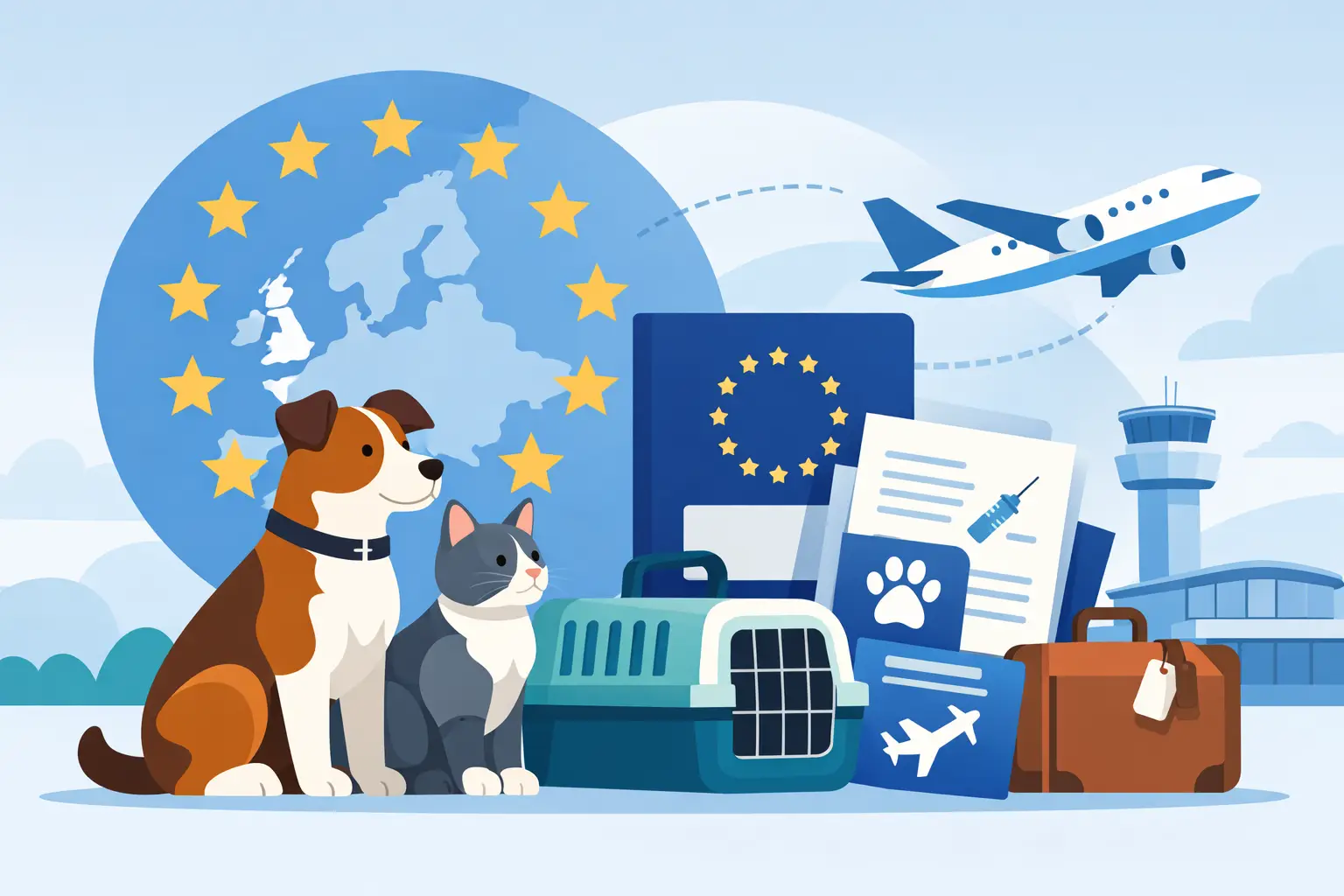
A ferry crossing can be the easy part of taking your pet to Europe. The part that catches owners out is ferry pet documentation: having the right certificate, the correct travel date and the required booking details ready before you reach the terminal. A pet that is accepted at check-in has usually been prepared well before departure.
For most dogs, cats and ferrets travelling from Great Britain to the EU, the key document is an Animal Health Certificate (AHC). It is not a document to leave until the night before you sail. The certificate must be completed within a strict timeframe, and a small mismatch between your booking, passport details or rabies record can create an avoidable delay.
What ferry pet documentation do you need?
Your ferry operator sets its own boarding procedures, but it does not replace the legal entry requirements for the country you are travelling to. You need to meet both. The operator may ask you to add your pet to the reservation, choose a pet-friendly travel option and arrive at check-in with the relevant paperwork available for inspection.
The in-person appointment also allows the vet to inspect your pet and confirm that no signs of infectious disease are apparent. For the simplest appointment, please have the owner attend with the pet.
For a standard journey from Great Britain into an EU country, your essential documents and details are:
- a valid Animal Health Certificate, issued by an Official Veterinarian no more than 10 days before you enter the EU;
- proof of a readable microchip, which must have been fitted before the current rabies vaccination was given;
- a current rabies vaccination record, including the vaccination date and product details;
- a confirmed ferry booking that includes your pet, where required by the operator; and
- any extra treatment evidence required by your destination or route.
Keep these together in a folder you can reach easily at the port. Do not pack the AHC in the boot under luggage. A border or ferry check may happen before you board, and presenting paperwork quickly makes a busy travel day much calmer.
The Animal Health Certificate is the central document
An AHC is the travel certificate used by most pet owners taking dogs, cats or ferrets from Great Britain to the EU. It is a single-trip document, rather than a replacement for the old style of repeat EU pet passport use from Great Britain.
The 10-day entry window is the date that matters most for ferry travel. Your certificate needs to be issued before you travel, but it cannot be issued too early if you will enter the EU more than 10 days later. If your ferry is delayed or you are taking a longer route through Great Britain before departure, plan around your actual date of EU entry rather than the date you begin your holiday.
Once used for entry, an AHC can support onward travel within the EU and return to Great Britain for a limited period, usually six months from the date of issue. That does not make it a multi-trip certificate for future holidays. A new trip from Great Britain to the EU generally requires a new AHC.
The certificate must match the pet travelling. Check the spelling of your name, your pet’s species, sex, date of birth where recorded, microchip number and travel destination. A one-digit microchip error is not a minor typo when the number is how your pet is identified at the border.
Start with the rabies and microchip check
The rabies vaccination is often the real timing constraint, particularly for first-time pet travellers. Your pet must be microchipped before the rabies vaccination is given. If the vaccination is a primary course, you must wait 21 full days before travelling to the EU.
For example, a dog receiving its first valid rabies vaccination on 1 June cannot enter the EU until 22 June. A ferry booking on day 20 may be non-refundable, so check the dates before committing to travel plans.
A booster vaccination can be valid without another 21-day wait if it was given before the previous rabies vaccination expired. If there has been a gap, it is treated as a new primary vaccination and the waiting period applies again. This is why the original vaccination dates matter, not simply whether a record says “rabies vaccinated”.
Your AHC appointment includes a veterinary check and Official Veterinarian sign-off, but it cannot correct a vaccination that was given in the wrong order or too recently. Reviewing the microchip and rabies record early gives you time to change your crossing if needed.
Check the ferry operator’s pet arrangements too
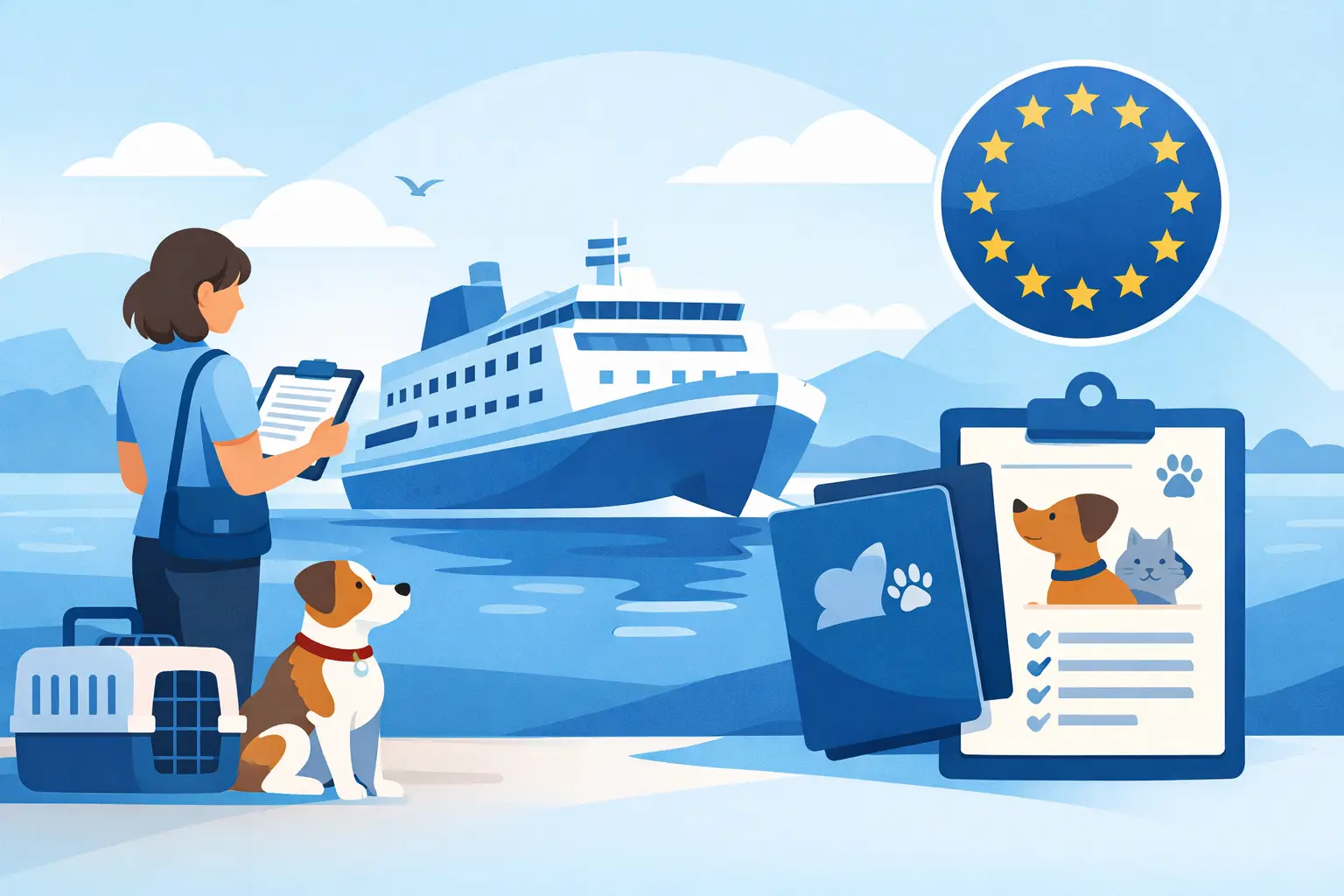
Ferry pet documentation is only one part of a successful sailing. Each operator has its own practical rules about where pets travel. Depending on the route and vessel, your pet may stay in your vehicle, use a kennel, travel in a designated lounge or remain with you in a pet-friendly cabin.
These arrangements affect what you need to bring. A pet remaining in the car needs safe ventilation, water and a secure travel setup. A pet using onboard facilities may need a lead, harness, muzzle where requested, bedding or a suitable carrier. Cats are normally safest in a secure carrier, even if they are calm at home.
Make sure your booking confirmation shows the right number and type of pets. A vehicle booking does not always automatically include an animal. If you are travelling with more than one pet, confirm the ferry operator’s limits and accommodation rules well ahead of time.
You should also allow extra time at the terminal. Pet checks, vehicle queues and seasonal traffic can all extend the check-in process. Arriving late because you stopped to sort paperwork at the port is a stressful way to begin a journey.
Do some routes need extra treatment?
Some destinations require additional treatment for dogs. If you are travelling to Finland, Ireland, Malta, Norway or Northern Ireland, dogs usually need tapeworm treatment by a vet within the required window before arrival. The treatment must be recorded correctly on the travel paperwork, including the product used, date and time.
The timing is specific: treatment is generally required no less than 24 hours and no more than 120 hours before entry. It depends on your arrival time, not the time your ferry leaves Great Britain. If your sailing is overnight, work backwards from the scheduled arrival and leave a sensible margin for disruption.
Rules can also differ for pets other than dogs, cats and ferrets, young animals, assistance dogs, or journeys involving more than five pets. If your trip is not straightforward, do not rely on a friend’s previous experience or an old social media post. Get the exact route and pet details checked before documents are prepared.
A practical timeline before your sailing date
As soon as you are considering ferry travel, check your pet’s microchip and rabies history. This is especially worthwhile if it is your pet’s first EU trip, their rabies booster date is close, or you have changed vet practices and records are spread across different documents.
Once your travel date is set, arrange your AHC appointment inside the 10-day window before EU entry. Standard appointments suit owners with a clear itinerary and enough notice. Repeat options can help frequent travellers whose pet details are already familiar to the administration process. If your departure is close, urgent availability may be possible, but early preparation gives you more choice over appointment location and timing.
Before the appointment, provide clear images or copies of the rabies vaccination record, microchip information, owner details, destination and ferry itinerary. The administration team can prepare the paperwork in advance, leaving the veterinary appointment focused on checking the pet and finalising the certificate. This is simpler than trying to complete complex travel forms at a general vet appointment while the travel deadline is approaching.
After the certificate is issued, read every page before you leave or before it is sent to you. Check the travel date, country of entry and microchip number against your records. If anything looks wrong, raise it immediately. Changes may require further action, and there is far more flexibility several days before a ferry than there is at the check-in lane.
Avoid the mistakes that lead to refused travel
The most common problems are predictable: an expired rabies booster, an AHC issued outside the permitted timeframe, a pet missing from the ferry reservation, or an owner assuming the certificate is valid for a later second trip. Another frequent issue is booking an appointment based on departure from home rather than the date of entry into the EU.
It is also worth checking your return plan. Your AHC can normally be used to return to Great Britain within its period of validity, provided the details remain correct. If you intend to stay longer, travel onward outside the permitted area, or take another trip after returning home, ask about the documents needed for that specific journey.
Vet Home Certs keeps the process focused on the task that matters: gathering your travel information, preparing the AHC paperwork and arranging the required veterinary inspection and sign-off in time for your crossing. The goal is not to make pet travel feel complicated. It is to remove the last-minute uncertainty that makes a simple ferry booking feel risky.
Pack your pet’s lead, water and familiar blanket, then keep the certificate folder by the front door. When the paperwork, booking and travel dates all line up, you can spend the crossing thinking about the holiday ahead rather than whether check-in will go to plan.