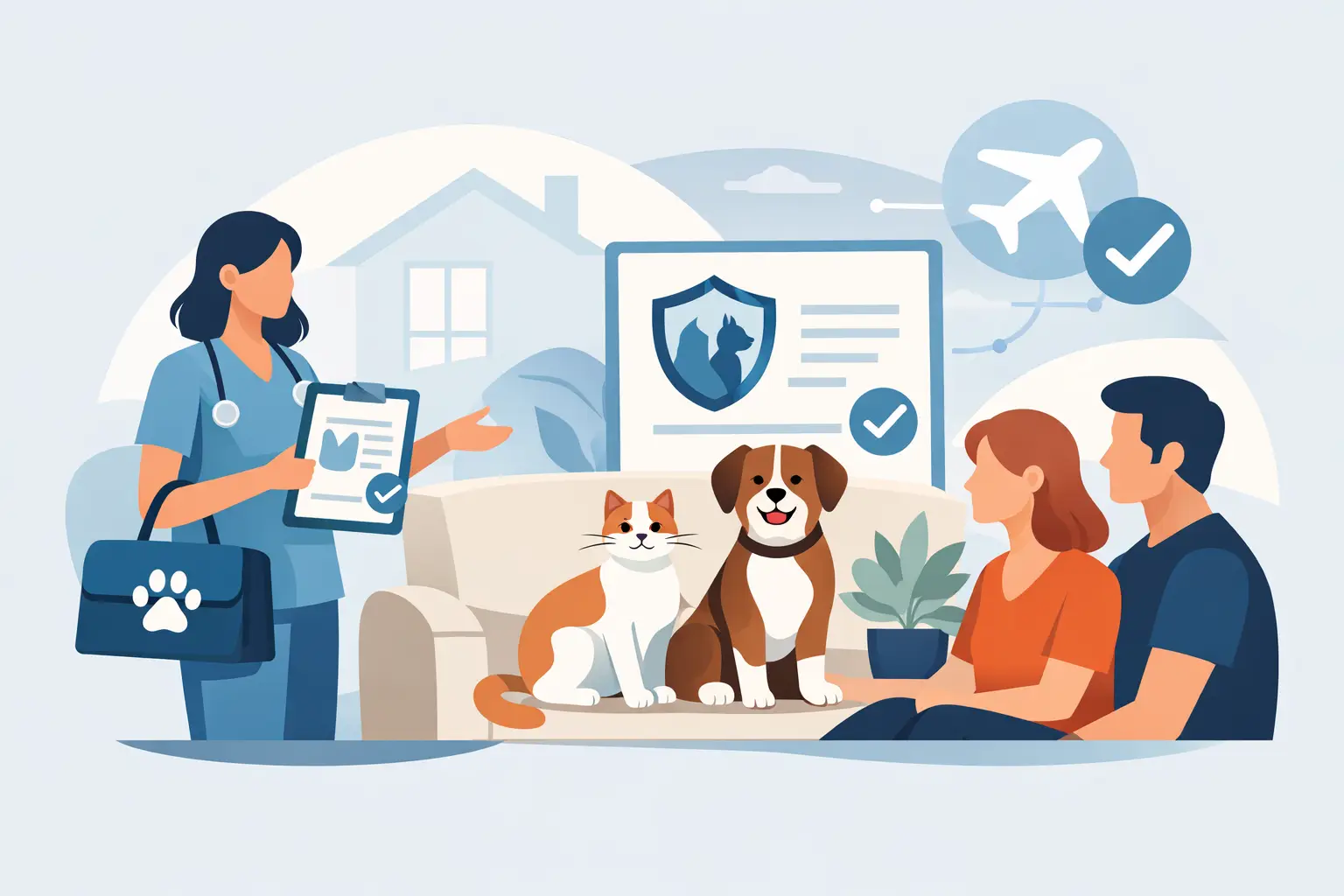
Is a Home Visit Animal Health Certificate Right?
Your ferry, train or flight may be booked, but your pet cannot enter the EU without the right paperwork. A home visit animal health certificate appointment can remove one of the most inconvenient parts of preparing for travel: getting your dog, cat or eligible pet to a veterinary practice during a tightly timed pre-travel window.
For many owners, this is not simply a matter of convenience. An anxious pet, limited transport, a busy household or a last-minute travel plan can make a standard clinic appointment difficult. A home visit gives you a practical alternative, while keeping the essential part of the process unchanged: your pet must be inspected and the Animal Health Certificate (AHC) must be completed and signed by an Official Veterinarian.
What a home visit Animal Health Certificate involves
An AHC is the document generally needed when travelling with a pet from Great Britain to an EU country. It confirms that your pet meets the relevant entry requirements, including identification and rabies vaccination rules. It is not a form that can simply be emailed to you or signed without seeing your pet.
With a home visit, the administrative preparation happens before the appointment. You provide the pet, owner and travel details needed for the certificate, along with clear evidence of your pet’s microchip and rabies vaccination. The paperwork can then be prepared ahead of time, so the veterinary appointment is focused on checking the original documents, inspecting your pet and completing the certification.
The key difference is location. Instead of fitting your day around a waiting room, the veterinary check takes place at your home where a suitable home-visit appointment is available. This can be particularly helpful for pets that find car journeys or unfamiliar clinical settings stressful.
The timing rules matter more than the location
A home visit does not change the legal travel window. For travel from Great Britain to the EU, an Animal Health Certificate must usually be issued no more than 10 days before your pet enters the EU. Count from the date of entry, not the day you leave home or set off for the port.
Once issued, an AHC is normally valid for entry to the EU for 10 days. It can then be used for onward travel within the EU and for return to Great Britain for up to six months from the date of issue, provided the certificate remains valid and your journey meets the relevant conditions. If you are planning another EU trip after that period, you will need a new AHC.
This is why booking too early can be as unhelpful as booking too late. Your appointment needs to fall within the correct window while leaving enough time to resolve any issue with the paperwork. If you are travelling on a Friday or over a bank holiday, it is sensible to plan backwards from your intended EU entry date rather than leaving the certificate to the final day.
When a home appointment makes sense
A home visit is often the right choice when travel logistics are already demanding. It can suit owners with several pets, people without easy access to a car, families managing children and luggage, or pets that become distressed at the practice. It also creates a calmer setting for an animal that is nervous around other dogs or clinical environments.
There is a trade-off. Home-visit availability depends on location, appointment capacity and the notice provided. A collection-point or standard appointment may be the quicker or lower-cost option in some areas, particularly when your travel date is close. If speed is your main priority, choose the appointment format that gives you a realistic route to having the completed certificate in hand before you travel.
Vet Home Certs is designed around this choice. The process separates the detailed certificate administration from the final veterinary sign-off, helping owners select a repeat, standard, urgent or home-visit route that fits their timing and location.
The in-person appointment also allows the vet to inspect your pet and confirm that no signs of infectious disease are apparent. When choosing your appointment, aim for a time the owner can attend with the pet to make the paperwork straightforward.
What to prepare before the veterinary check
The smoothest appointments are the ones where every detail has been checked before the vet arrives. A single mismatch between a booking form, a passport, a vaccination record and a microchip number can delay a certificate, so take a few minutes to review everything carefully.
You will normally need your pet’s current rabies vaccination evidence, the original document showing the microchip number, your travel dates and destination, and the details of the person travelling with the pet. If another person will accompany your pet, or your pet will travel within the rules for an authorised person, that information must be correct on the certificate.
Tell us at the booking stage if your pet will travel with an authorised person rather than the owner. You must show the vet proof that the owner’s journey takes place no more than five days before or after the pet travels. Use our Stage 2 downloadable template for the authorisation letter, in the language of the first country of entry. If the authorised person attends instead of the owner, they must bring the letter signed by the owner. If the owner attends, the vet will bring the letter for the owner to sign. Either the owner or the authorised person travelling with the pet may sign the AHC at the appointment; please confirm who will sign beforehand.
Your pet must be microchipped before the rabies vaccination used for travel. For a first rabies vaccination, there is generally a 21-day wait before the pet can travel. A valid booster given before the previous vaccination expired does not normally restart that wait, but the dates must be checked carefully. Do not assume a rabies vaccine is valid for travel simply because it appears current on a veterinary record.
For dogs travelling to Finland, Ireland, Malta, Norway or Northern Ireland, tapeworm treatment may also be required. Where it applies, it must be administered by a vet and recorded within the required timeframe, generally between 24 and 120 hours before entry. This is a separate timing point to build into your plan.
Before the appointment, make sure you can provide:
- the exact microchip number and your pet’s original vaccination record;
- your EU entry date, route and destination country;
- the name and details of the person travelling with the pet;
- any previous rabies vaccination dates, especially where a booster is involved; and
- details of any required tapeworm treatment for your destination.
Clear photographs can help the administration team prepare documents, but keep the originals accessible for the veterinary check. The Official Veterinarian needs to see the relevant original evidence before signing the AHC.
How to book around your travel date
Start with the date your pet will arrive in the EU, then work backwards. If you are taking a ferry from Dover to Calais, the relevant date is usually the day you arrive in France. If you are driving through several countries, the first EU country you enter is the crucial point for certificate timing.
Give yourself room for practical issues. A home visit may need to be arranged around veterinary availability, and certificates with more complex travel arrangements can take longer to prepare. If you have found a mistake in a rabies record, have a newly vaccinated pet or are travelling very soon, say so at the point of enquiry. An urgent appointment may be possible, but it cannot override the 21-day wait after an initial rabies vaccination or replace missing evidence.
Repeat travellers can make future bookings easier by keeping copies of their previous certificate and vaccination records. The AHC itself is not reusable beyond its validity period, but accurate records reduce the chance of avoidable back-and-forth when arranging the next trip.
What happens on the day
Have your pet, the original documents and your travel information ready at the agreed time. The vet will confirm your pet’s identity, check the microchip and review the rabies vaccination and any other relevant requirements. They will also carry out the required inspection before completing the certificate.
Keep the appointment calm and practical. Have a dog on a lead, a cat safely contained until needed, and any nervous pet in the part of the home where they are most comfortable. If you have more than one pet travelling, make sure each animal’s documents are clearly separated. Similar names and multiple vaccination cards are an easy source of confusion.
Once the AHC has been signed, store it somewhere safe and take it with you throughout the journey. Border officials may ask to see it when entering the EU, and you may need it again during onward travel or when returning to Great Britain.
A simpler way to get travel-ready
A home visit Animal Health Certificate can make pet travel preparation feel far more manageable, but it works best when the timing and documents are right before the appointment takes place. Check your entry date, gather the originals and arrange the certificate early enough to leave breathing space. Then you can focus on the journey ahead and the much better part of travelling with your pet: arriving together.