
How to Verify Microchip Travel Information
A single wrong digit can stop an otherwise well-planned pet trip before it begins. When you verify microchip travel information, you are checking that your pet, their rabies vaccination record and their Animal Health Certificate all refer to the same animal. It is a small administrative task with a very big job: giving the Official Veterinarian clear, consistent evidence to certify your pet for travel.
For travel from Great Britain to the EU, the microchip is not just useful identification. It is the number that connects the pet in front of the vet with the travel paperwork. Checking it early means there is time to resolve a discrepancy before your appointment or departure date.
Why microchip details matter for EU pet travel
Your dog, cat or ferret must be microchipped to travel to the EU on an Animal Health Certificate (AHC). The microchip number needs to match across the relevant documents, including the rabies vaccination record and the AHC.
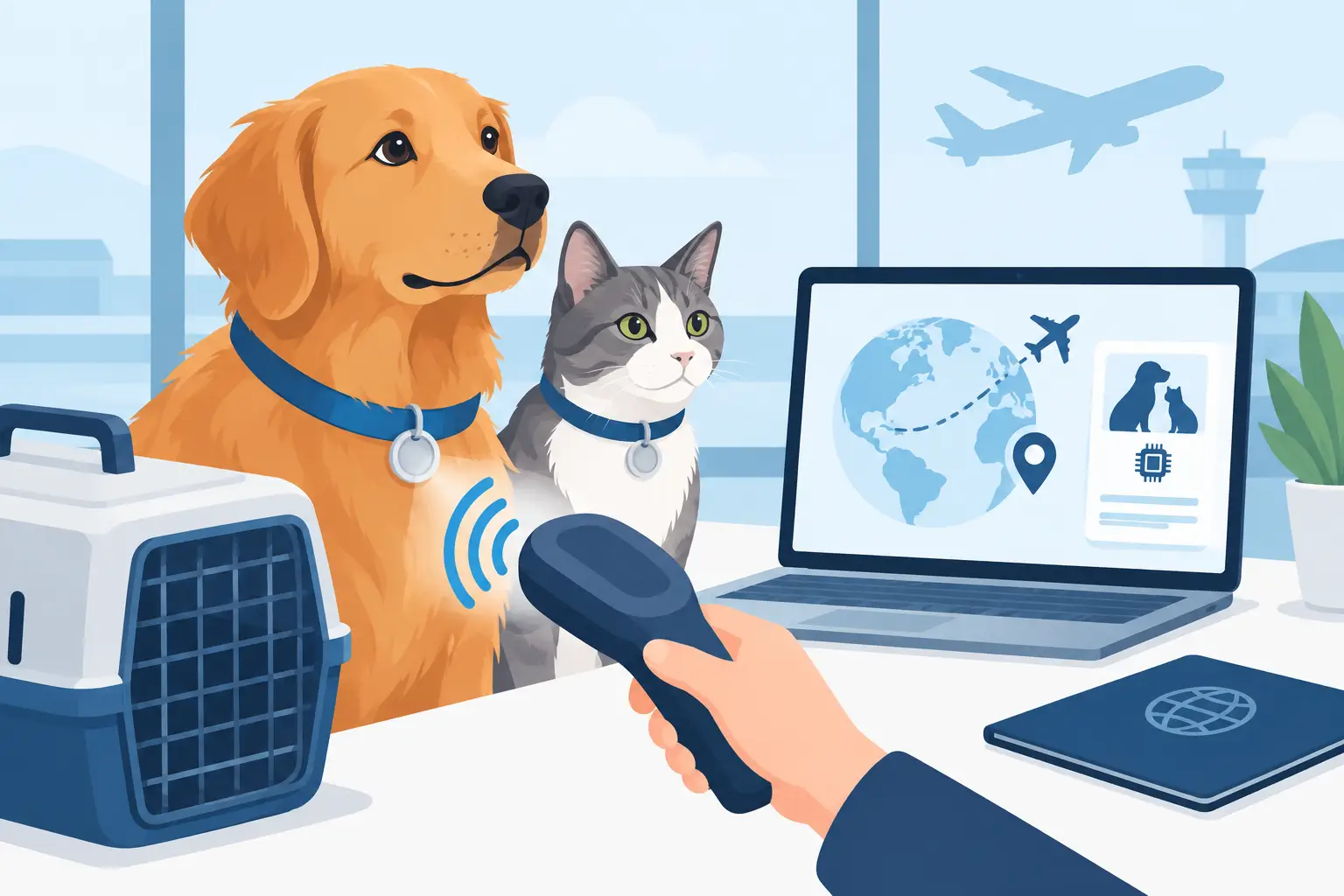
At the certification appointment, the vet will scan your pet’s microchip as part of the check. If the number on the scanner differs from the number supplied in the paperwork, the certificate cannot simply be signed off on the spot. The cause needs to be investigated, and that can put a time-sensitive journey at risk.
The order of events matters too. For the rabies vaccination to support EU travel, the pet must have been microchipped before, or on the same day as, the vaccination. If the rabies jab was given before the microchip was inserted, it will not meet the usual travel requirements, even if the vaccination itself is still medically current.
How to verify microchip travel information before booking
Start with the original vaccination card, rabies certificate or previous pet-travel document, rather than relying on a note in your phone or a remembered number. The microchip is normally a 15-digit number. Copying it by hand is where most avoidable errors happen, particularly when 0, 1, 5 and 8 have been written unclearly.
Check the number shown on your pet’s rabies vaccination record against the number recorded by your usual vet. If your pet has a previous EU pet passport or AHC, compare that number as well. Every digit should be identical.
Then consider having the chip scanned before travel if there is any doubt. Your regular vet may be able to do this, or it can be checked at your AHC appointment. A scan confirms what is actually inside your pet, not just what has been typed on a document. This is particularly worthwhile if your pet was adopted, rehomed, imported, has changed veterinary practice, or has a long medical history with more than one record.
When submitting your information for an AHC, enter the number exactly as it appears on the current rabies record. Avoid adding spaces, guessing a digit or using a number from an old collar tag. A collar tag can be helpful for reunification, but it is not the identifier used for border documentation.
The three details that must line up
The key comparison is straightforward: the scanned microchip, the rabies vaccination record and the Animal Health Certificate must show the same microchip number. The pet’s species, date of birth and description should also make sense together, but the microchip number is the clearest individual identifier.
If you are travelling with more than one pet, check each animal separately. It is surprisingly easy to attach the right rabies certificate to the wrong pet when two dogs have similar names, colours or vaccination dates.
Check the rabies dates at the same time
Microchip verification and rabies timing go together. A correct chip number will not solve a vaccination date problem, so check both before arranging your certificate.
For a first rabies vaccination, pets usually need to wait 21 full days before they can travel. The vaccination must have been given after the microchip was implanted, or on the same day. A booster vaccination may avoid a new waiting period if it was administered before the previous rabies vaccination expired. If there has been a gap, it may be treated as a new primary vaccination for travel purposes.
Your AHC must be issued within 10 days of entering the EU. That gives pet owners a relatively tight window, especially when travel dates, ferry times or flights change. Sending the microchip and rabies information in advance allows the administration team to prepare the paperwork for the veterinary examination, rather than trying to correct details during a last-minute appointment.
Some journeys have additional requirements. Dogs travelling directly to Finland, Ireland, Malta, Norway or Northern Ireland may need tapeworm treatment within a specified time before arrival. The microchip is scanned and recorded as part of that treatment process too, so make sure the treating vet has the correct number available.
What to do if the microchip number does not match
Do not amend the number yourself on a vaccination card or previous travel document. A handwritten correction without the appropriate veterinary record can create more questions at the appointment or border.
Instead, contact the veterinary practice that holds the vaccination record and explain the discrepancy. They may need to scan the pet, check the clinical notes and issue an amended or replacement record where appropriate. If the microchip itself cannot be read, or there is a genuine uncertainty over which chip is implanted, seek veterinary advice promptly. These cases can take longer than a routine AHC booking.
There are a few common scenarios:
- A digit was mistyped when a vaccination record was created.
- An old record relates to a previous microchip that has since been replaced.
- The owner has supplied a registration database number rather than the implanted microchip number.
- The rabies vaccination was recorded against the wrong pet in a multi-pet household.
Each situation has a different solution. What matters is resolving it from the veterinary records before the AHC is prepared. Waiting until the day before you travel limits the options available.
Bring the right evidence to your AHC appointment
Your AHC appointment should be the final check, not the first time anyone sees the key documents. Bring the original rabies vaccination evidence, along with any previous pet passport or AHC that helps confirm the travel history. Have your travel date, destination and route ready too, as requirements can depend on where you are entering and whether you are travelling onward.
The vet needs to be satisfied that the microchip can be read and that the documents support the certification. AHCs are regulated documents, so an Official Veterinarian cannot overlook inconsistent information because a ferry is booked or a holiday is due to start. That is why preparation matters more than rushing.
Vet Home Certs is designed around this sequence: submit your pet and travel details, let the administration team prepare the certificate, attend the arranged veterinary check, and receive the completed AHC ready for travel. Standard, repeat and urgent appointment options can help where travel is approaching, but urgent service cannot replace a valid microchip and correctly timed rabies vaccination.
A quick check before you set off
Once your AHC has been issued, read the microchip number again before leaving home. Compare it with the rabies record and, if possible, the number scanned at the appointment. Keep the original documents protected and accessible rather than packed at the bottom of a suitcase.
A correct microchip number may feel like a minor detail, but it is the thread that holds your pet’s travel evidence together. Check it early, allow time for any correction, and your AHC appointment can stay focused on getting you and your pet ready for the journey ahead.



Leave a Reply