
Do Pets Need an Examination for EU Travel?
An Animal Health Certificate is not paperwork you can complete at the kitchen table the night before a ferry crossing. If you are asking whether pets need an examination before EU travel, the answer is usually yes. A veterinary examination is a required part of the Animal Health Certificate, or AHC, process for most dogs, cats and ferrets travelling from Great Britain to the EU.
The good news is that this is a focused travel certification appointment, not an open-ended visit to a general veterinary practice. Once your information and documents have been checked in advance, the final examination and Official Veterinarian sign-off can be straightforward.
Do pets need an examination for an AHC?
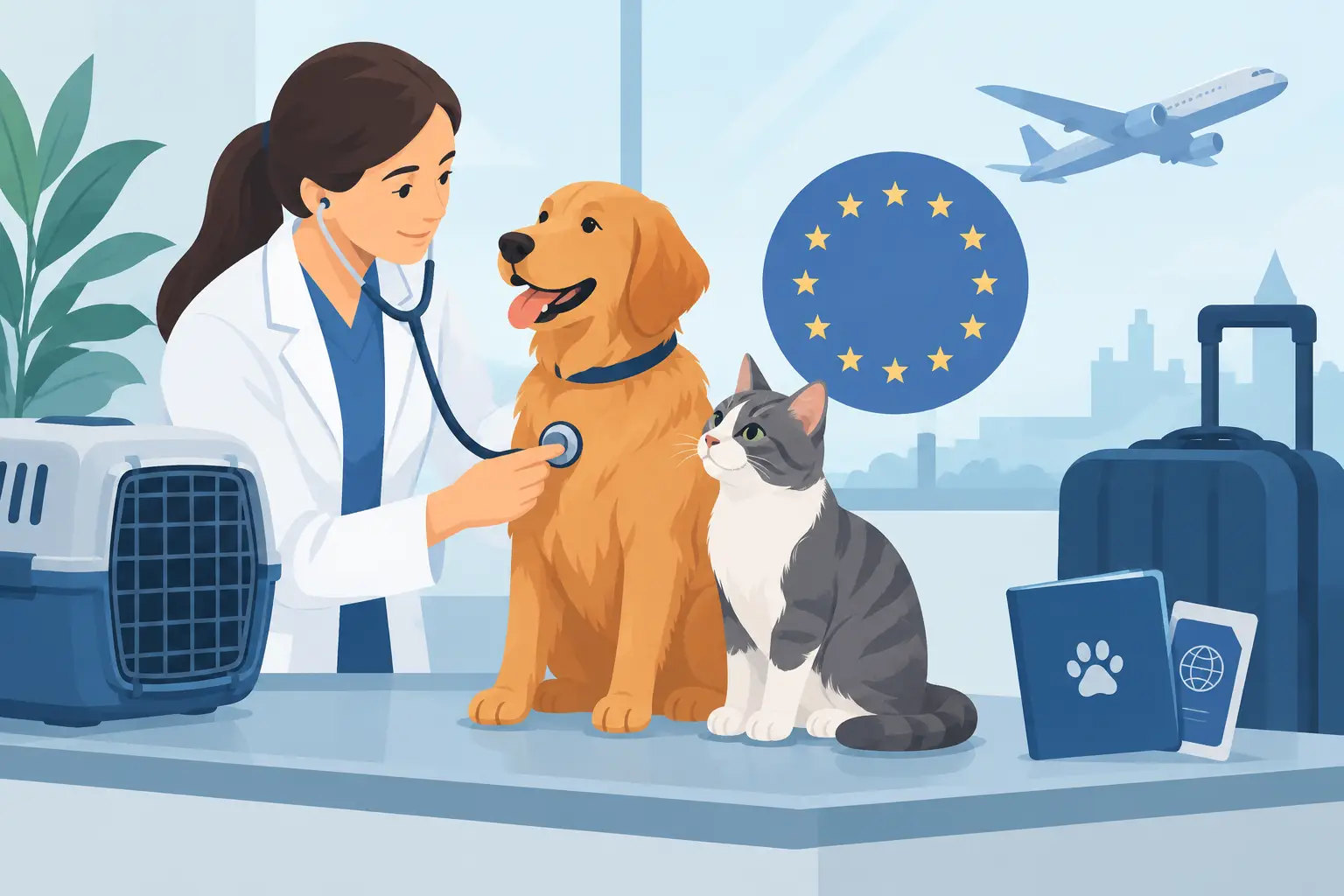
For an AHC to be issued, an Official Veterinarian must examine your pet and be satisfied that the travel requirements have been met. The certificate is an official declaration for entry into the EU, so the vet cannot simply sign based on photographs, an email or a previous appointment.
The examination confirms the animal presented is the one named on the certificate and that its identification and vaccination information support the journey. It also allows the vet to make the declarations required by the AHC. This is why an in-person appointment remains necessary even when the administration has been prepared remotely.
Most pet owners travelling from Great Britain to an EU country need an AHC unless they hold a valid EU-issued pet passport that can still be used for the trip. A pet passport issued in Great Britain is no longer valid for travel to the EU, apart from limited circumstances. The usual process applies to dogs, cats and ferrets. Other species can have different documentation and health requirements, so they need checking well before departure.
What happens during the pet travel examination?
The appointment is designed around your travel documents. Your pet will need to be present, along with its original vaccination record and microchip information. The Official Veterinarian checks the microchip can be read and matches the number recorded in the paperwork. A mismatch, a missing digit or an unreadable chip can stop a certificate being issued, which is why accurate records matter.
Rabies vaccination and timing
The vet will review the rabies vaccination details, including the vaccination date, product information and validity period. For a first rabies vaccination, pets must usually wait 21 days before travelling. The microchip also needs to have been implanted before, or at the same time as, the rabies vaccination for it to count for travel.
A booster vaccination can avoid the 21-day wait when it was given before the previous valid vaccination expired. If there has been a gap, it may be treated as a new vaccination for travel purposes. This is one of the most common reasons a planned journey needs to move, so it is worth checking the dates before you commit to ferry, rail or flight bookings.
A travel certification check, not a routine health consultation
The examination is not intended to replace routine healthcare with your usual vet. It is a certification appointment focused on whether the pet and the documentation meet the rules for the stated trip. If your pet appears unwell or the vet has concerns relevant to safe travel, the certificate may not be appropriate at that time.
That distinction helps set expectations. You do not need to arrange a full annual health check simply because you need an AHC. However, a pet that is already receiving treatment, has recently been ill or has a condition that could affect travel should be discussed with your regular veterinary practice early enough to make a sensible plan.
When should the examination take place?
An AHC can be issued no more than 10 days before your entry into the EU. The date of entry is what matters, rather than the date you leave home or arrive at a UK port. If you are taking an overnight ferry, driving through several countries or flying via another destination, plan the appointment around the point at which you first enter the EU.
That 10-day window is strict, but leaving everything until the last moment creates unnecessary pressure. The best approach is to submit your details as soon as your travel dates are confirmed, then arrange the final examination within the permitted period. This gives time for the certificate to be prepared and for any question about the microchip or rabies history to be resolved before you are due to travel.
Once issued, an AHC is generally valid for entry into the EU for 10 days, onward travel within the EU for up to four months, and return to Great Britain for up to four months. The certificate is normally for one outward journey, rather than a permanent replacement for a pet passport. Frequent travellers should factor this into how they plan repeat trips.
Why preparation before the appointment saves time
The quickest part of the process should be the veterinary examination itself. That only happens when the administrative work has already been done properly. Names, dates of birth, microchip numbers, rabies vaccination dates, destination details and the owner’s travel plans all need to be entered correctly on the AHC.
A small error can have a large effect. For example, a pet’s name may look harmlessly different on a booking confirmation and a vaccination card, but official documentation needs consistency. Equally, a travel date can alter whether the rabies vaccination is valid or whether the AHC appointment falls inside the 10-day issue window.
This is why Vet Home Certs collects and prepares the relevant information before coordinating the final veterinary check. It makes the appointment about confirming the pet and signing compliant paperwork, rather than trying to build a certificate from scratch while you wait.
Extra checks for particular journeys
Some trips need more than the standard AHC examination. Dogs travelling directly to Finland, Ireland, Malta, Norway or Northern Ireland may need tapeworm treatment administered by a vet between one and five days before entry. That treatment must be recorded correctly in the certificate, so the timing needs to work alongside the AHC issue date.
Commercial movements, travel involving more than five pets, pets being sold or rehomed, and journeys where the owner is not travelling within the relevant timeframe can fall under different rules. These cases may require different certification from a standard non-commercial AHC. Do not assume that a family holiday process applies if the purpose of travel is breeding, sale, transfer of ownership or organised transport.
Northern Ireland also has separate arrangements from travel from Great Britain to the EU. If your route includes Northern Ireland or you are unsure how your travel is classified, raise it when you provide your trip details rather than relying on assumptions.
What to bring and how to help your pet
Bring the original rabies vaccination record and any other documents requested when your certificate was prepared. Keep your pet secure and comfortable for the appointment, particularly if it finds new places or unfamiliar people stressful. A familiar blanket, suitable carrier or a few quiet minutes before the chip is scanned can make the process easier.
Avoid booking an appointment so tightly that one delayed train, traffic queue or missing document puts the whole trip at risk. If you need a home visit, collection-point appointment or an urgent option, organise this as early as possible. Convenience matters, but the certificate still has to be issued within the rules.
If the examination identifies a problem
A problem does not always mean your holiday is cancelled, but it does mean acting quickly. An incorrect microchip number, unclear vaccination record or mistimed rabies jab may need clarification from the practice that issued the record. In some cases, the only safe option is to change the travel date.
Trying to travel with incomplete or inaccurate documentation risks refusal at check-in, at the border or on entry to your destination. The simplest way to avoid that position is to check the basics early, give accurate information and leave enough space before departure for the final examination.
Your pet’s examination is the final safeguard in a process built around travel dates, identification and valid records. Plan it as a calm final step, not a last-minute obstacle, and you can set off with the certificate in hand and far less to worry about.

Leave a Reply