Travel Certificate Guide for EU Pet Trips
Your ferry, flight or Eurotunnel booking may be confirmed, but your pet cannot travel from Great Britain to the EU on booking details alone. This travel certificate guide explains the document most pet owners need: an Animal Health Certificate, often called an AHC. It is time-sensitive, checked at the border and based on the exact details of your pet and journey, so leaving it until the last few days can turn a simple holiday plan into a stressful race.
For most dogs, cats and ferrets travelling from Great Britain to an EU country, an AHC is the route to compliant travel. The process is manageable when you know what needs doing, when to book and what information must be correct before an Official Veterinarian signs the certificate.
What is an Animal Health Certificate?
An Animal Health Certificate is an official document for non-commercial movement of eligible pets from Great Britain into the EU, Northern Ireland and certain other European destinations. It confirms that your pet meets the relevant entry requirements, including identification and rabies vaccination rules.
It is not a general letter stating that your pet is healthy, and it is not a pet passport issued in Great Britain. Since Brexit, a Great Britain-issued pet passport is not normally valid for travel into the EU. Each journey usually requires a new AHC, even when your pet has travelled before.
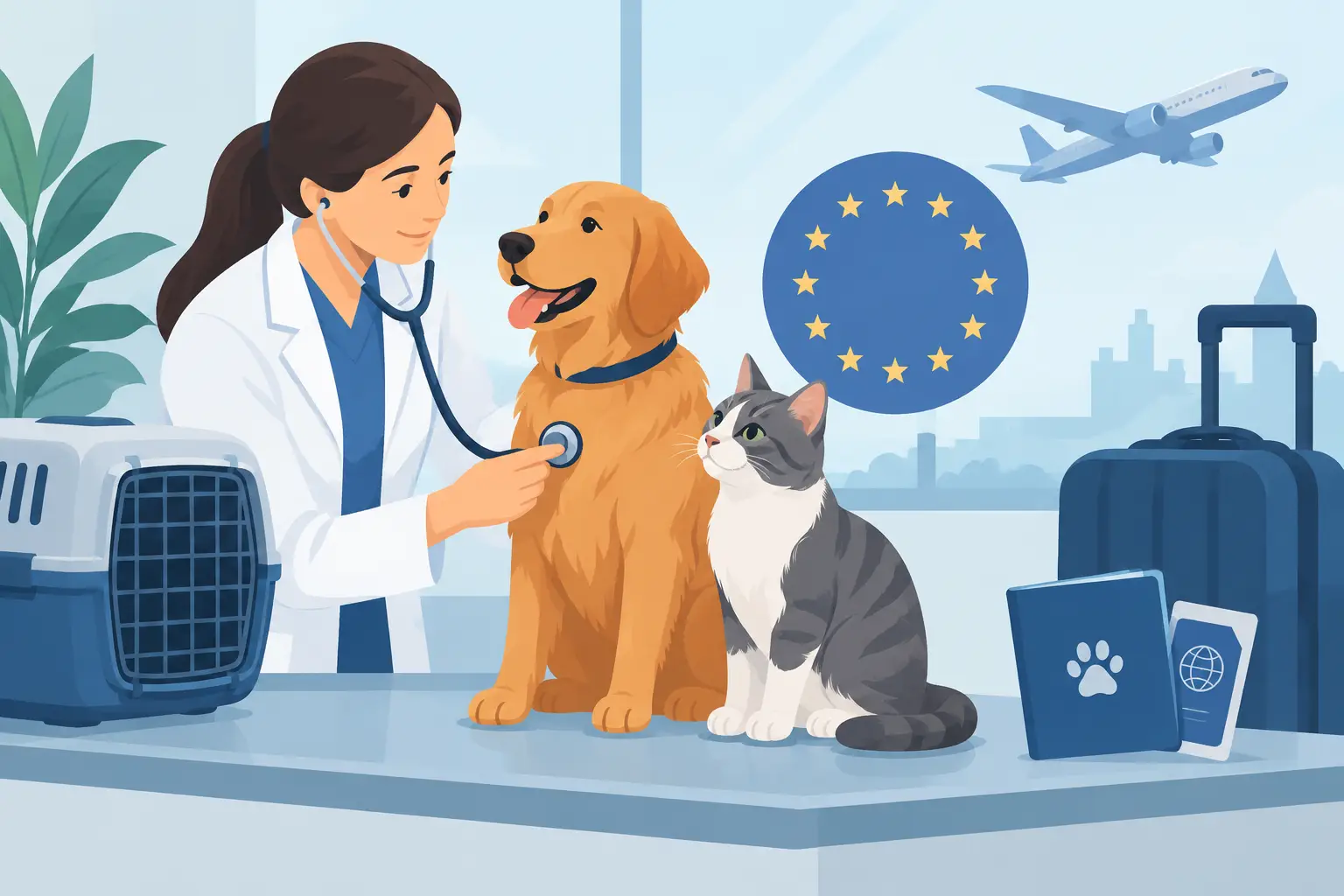
The certificate must be completed and signed by an Official Veterinarian. That sign-off follows a review of your pet’s records and an inspection. The paperwork must match the details in the microchip record, rabies vaccination evidence and your travel plan. A small error in a name, microchip number, date or destination can cause problems at check-in or at the border.
Travel certificate guide: work backwards from EU entry
The key date is the day you enter the EU, not necessarily the day you leave home. An AHC can be issued up to 10 days before entry into the EU. If you are taking an overnight ferry, flying via another country or driving through several countries, make sure you use the date and place of first EU entry.
For example, if you sail from Dover to Calais on 20 July, your certificate needs to be issued within the 10 days before 20 July. If you leave Great Britain earlier for a route that enters the EU later, the timing still relates to that first EU border.
Once issued, an AHC is generally valid for 10 days for entry into the EU, then for onward travel within the EU for up to six months, and for return to Great Britain during that period. The practical point is simple: it can cover a multi-country holiday, but it is not a reusable document for future trips.
Booking early gives the administration team time to prepare the certificate from your information and identify anything that needs checking. The veterinary appointment itself must still fall within the certificate window. This is why a specialist service will ask for travel dates at the start, rather than treating the appointment as an ordinary vaccination booking.
Check your pet is eligible before you book
Most travelling pets need a readable microchip and a valid rabies vaccination. The microchip must have been implanted before the rabies vaccination was given. If the order is wrong, the vaccination may not support travel, even if both are recorded in the same pet health booklet.
For a first rabies vaccination, your pet must be at least 12 weeks old and you normally need to wait 21 full days after the vaccination date before travelling. A booster may be valid without another 21-day wait if it was given before the previous vaccination expired. If there has been a lapse, it may count as a new primary vaccination instead.
Bring the original vaccination record to the appointment. A clear photo is useful when submitting details in advance, but the Official Veterinarian needs the original document available for the final checks. Do not rely on a typed vaccination history, an app entry or a verbal confirmation from a previous practice.
Some destinations and routes have extra requirements. Dogs travelling to Finland, Ireland, Malta, Norway or Northern Ireland, for example, may need tapeworm treatment administered by a vet between 24 and 120 hours before entry. The treatment must be recorded correctly. This is separate from the AHC appointment in some cases, so build it into your schedule rather than assuming it will happen automatically.
Rules can also differ for pets travelling with someone other than their owner, for more than five pets, or as part of a move or sale. These situations can fall outside standard non-commercial pet travel rules. If any part of your journey is unusual, flag it before paperwork is prepared.
The AHC process, without the guesswork
A well-organised certificate service reduces the process to four stages. First, you provide the pet, owner and travel information. This usually includes your full name and address, contact details, pet species, breed, sex, date of birth, microchip number, rabies vaccination information, destination and planned route.
Next, the administration team prepares the certificate paperwork in advance. This matters because the form contains detailed declarations and journey information. Preparing it before the appointment leaves the vet free to concentrate on checking the original records, inspecting your pet and completing the official sign-off.
At the arranged appointment, take your pet, the original rabies vaccination record and any other requested documents. The Official Veterinarian checks the microchip, reviews the vaccination details and carries out the necessary inspection. Allow enough time to check the paperwork carefully before you leave, particularly the microchip number, owner details, date of travel and country of entry.
Before signing the certificate, the vet will inspect your pet for any visible signs of infectious disease. If possible, book a slot that the owner can attend: it makes confirming the details and signing the documents easier.
Finally, keep the completed AHC safe and accessible. Do not pack it in a suitcase going into the hold or leave it at home with the boarding passes. You may need it at carrier check-in, at the EU border and during the return journey. A protective folder is sensible, but do not separate any pages or alter the certificate.
Choose the right appointment timing
A standard appointment is often the best value when your travel date is comfortably ahead and your pet’s rabies history is clear. It gives you time to submit information, correct any missing detail and arrange a convenient collection point or appointment location.
Repeat travellers can often move faster because they understand the documents needed, but they still need a fresh AHC for each trip. The fact that last year’s certificate was accepted does not replace the need to check this year’s dates and destination requirements.
Urgent options can help when travel is close, but they cannot shorten legal waiting periods after a first rabies vaccination or repair an expired vaccination history overnight. They also depend on appointment availability and having complete, legible documentation ready to review. Urgent should mean a quicker administration and booking route, not taking chances with compliance.
Convenience matters too. If fitting an appointment around work, children and a nervous pet is difficult, look for a service that can offer home visits, home delivery arrangements or collection-point appointments where available. Vet Home Certs is built around this kind of specialist administration, coordinating the paperwork and veterinary sign-off rather than asking pet owners to navigate the process alone.
Avoid the mistakes that cause last-minute delays
The most common issue is booking based on departure rather than EU entry. The next is assuming an old rabies vaccination is valid without checking the expiry date and the date of the previous booster. Both can affect whether an AHC can be issued for your planned trip.
Owners also sometimes submit a microchip number with one digit missing or confuse the date a vaccine was entered in the record with the date it was administered. Check the original document character by character. If your surname, address or passport details have changed since a previous journey, provide the current information from the beginning.
Do not forget carrier rules. Airlines, ferry operators and rail services may have their own booking, crate, muzzle or check-in requirements alongside government pet travel rules. An AHC supports entry compliance, but it does not reserve a pet space or replace the carrier’s conditions of carriage.
If you are travelling through several countries, state the full route when you book. Your first entry point, final destination and any required tapeworm treatment timing may all shape the plan. A little accuracy at this stage is cheaper and easier than trying to amend paperwork on the day you travel.
A pet trip should start with the excitement of getting away, not a search for paperwork at the kitchen table. Confirm your first EU entry date, check the rabies record now and arrange your AHC appointment early enough to travel with your documents sorted and your pet by your side.