
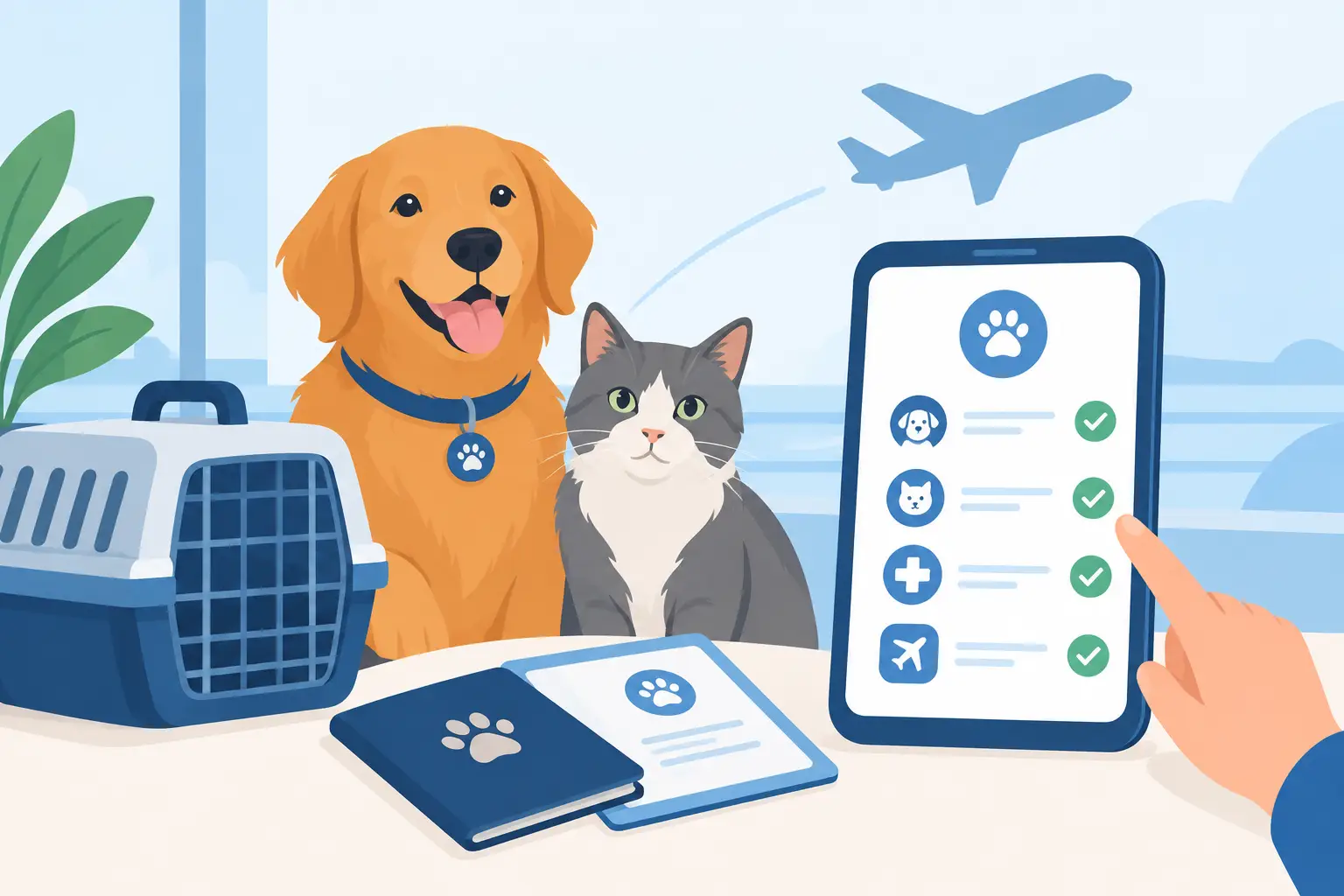
How to Submit Pet Journey Details for an AHC
Your ferry is booked, the pet-friendly hotel is confirmed and your dog’s passport is packed with the rest of the travel documents. Then comes the part that cannot be left until the last minute: you need to submit pet journey details so the right Animal Health Certificate (AHC) can be prepared for your trip.
This is not paperwork for paperwork’s sake. An AHC is a regulated document for travelling from Great Britain to the EU, and the information on it must match your pet, your journey and the checks carried out by the Official Veterinarian. Providing clear, complete details early gives the administration team time to prepare the certificate properly and helps avoid a stressful rush before departure.
Why your journey details matter for an AHC
Your Animal Health Certificate is issued for a specific pet and a particular journey. The vet signing it needs to be satisfied that the information is accurate and that your pet meets the relevant entry conditions. A small mismatch – such as a microchip number copied incorrectly, an incorrect travel date or the wrong first country of entry – can create avoidable problems when paperwork is being prepared.
For most journeys from Great Britain to the EU, the AHC must be issued within the required window before your arrival in the EU. That means timing matters just as much as accuracy. If you wait until a few days before you leave to send information, choices around appointment time, location and delivery can become more limited.
Submitting the details in advance allows the certificate to be drafted before your veterinary appointment. The final examination and sign-off still need to take place with an independent veterinary surgeon or Official Veterinarian, but the administrative work should not be competing with your departure countdown.
What to have ready before you submit pet journey details
It is usually quickest to gather the key information in one sitting rather than start a form while searching through old emails, vaccination records and booking confirmations. You will need your contact details, your pet’s details and your proposed journey information.
Your pet’s microchip number is especially important. Check it directly against the microchip record where possible, and enter every digit carefully. You may also be asked for species, breed, sex, date of birth and description. These details need to reflect the pet travelling, not simply what you remember from a previous registration or insurance document.
You will also need evidence of a valid rabies vaccination. For a first rabies vaccination, or a vaccination that was allowed to lapse, there is normally a waiting period before travel is permitted. A booster given while the previous vaccination was still valid is treated differently. The dates on the vaccination record matter, so send clear photographs or scans that show the microchip details, vaccination date, vaccine product and validity dates where recorded.
For the journey itself, be ready to provide your departure date, the EU country you will enter first and your overall destination. This may be different from the country where you are staying. For example, if you travel by ferry to France and then drive to Spain, France is generally your first EU entry point, even though Spain is your holiday destination.
If you are travelling with more than one pet, submit details for each animal. Certificates and eligibility checks are individual, and it is much easier to spot missing information before documents are prepared than on the day of the appointment.
Choose the appointment around your travel date
The best appointment is not simply the earliest one available. It needs to fall within the certificate’s permitted issue period while leaving enough breathing room before you travel. Consider your sailing, flight or Eurotunnel check-in time, not just the date you expect to arrive at your destination.
A standard appointment often suits owners who have planned their trip well ahead. If your travel date is close, an urgent option may be more appropriate, subject to availability and whether your pet’s rabies requirements are already in order. Urgent administration can speed up the paperwork process, but it cannot change mandatory rabies waiting periods or replace the required veterinary examination.
Location matters too. Depending on where you are based, a collection-point appointment, home visit or other arranged format may be available. A home visit can be useful where travelling with several pets is difficult, while a collection-point appointment may be the most practical choice for a straightforward trip. The right option depends on your location, diary and how close you are to departure.
How to avoid delays when submitting information
Clear images are one of the simplest ways to keep an application moving. Photograph vaccination pages in good light, include the whole page and make sure handwritten entries are readable. Blurry close-ups can hide the page number, practice stamp or date needed to check the record.
Use the travel date you actually intend to travel, even if you think it may change. If your plans do move, let the team know promptly. An AHC is not a general, reusable document for future holidays. It is created around the details supplied and has defined validity for entry, onward travel and return to Great Britain.
It also helps to tell the team about any part of the trip that is out of the ordinary. This could include travelling through several countries, taking an indirect route, travelling with someone other than the registered owner, or arranging a move rather than a holiday. These circumstances do not automatically prevent travel, but they may affect what needs checking before a certificate can be prepared.
Be honest if you are unsure about a vaccination date, a microchip entry or your route. Guessing can create more work later. A specialist AHC administration service is there to identify what is needed and help make the process manageable, not to expect pet owners to interpret every rule alone.
What happens after you send your details
Once your information has been received, the administrative team reviews it and prepares the certificate paperwork for the planned appointment. If anything is missing or unclear, you may be asked for a better image, an additional page from the vaccination record or confirmation of a travel detail. Replying quickly is the best way to protect your preferred appointment and travel timetable.
At the arranged appointment, the veterinary surgeon carries out the necessary check and confirms the certificate can be signed. Take your pet and the original vaccination documentation with you unless you have been told otherwise. The Official Veterinarian must rely on the original records for final certification, so do not assume a photo on your phone is enough on the day.
After the certificate is signed, keep it safe and accessible for the journey. Check the details yourself before setting off: your name, your pet’s microchip number and travel dates should all be correct. Keep the AHC with the rabies vaccination evidence rather than packing it in a suitcase or car boot.
A simple step that makes travel easier
The AHC process is time-sensitive, but it does not need to take over your holiday planning. Vet Home Certs is designed to make the administrative side clear: send the information, allow the paperwork to be prepared, attend the veterinary check and travel with the completed certificate.
The earlier you submit pet journey details, the more options you are likely to have and the less likely it is that a missing date or unclear record will disrupt your plans. Give the paperwork the same attention as your transport booking, and you can focus on the much better part of the journey: arriving in Europe with your pet ready to enjoy the trip.

Leave a Reply