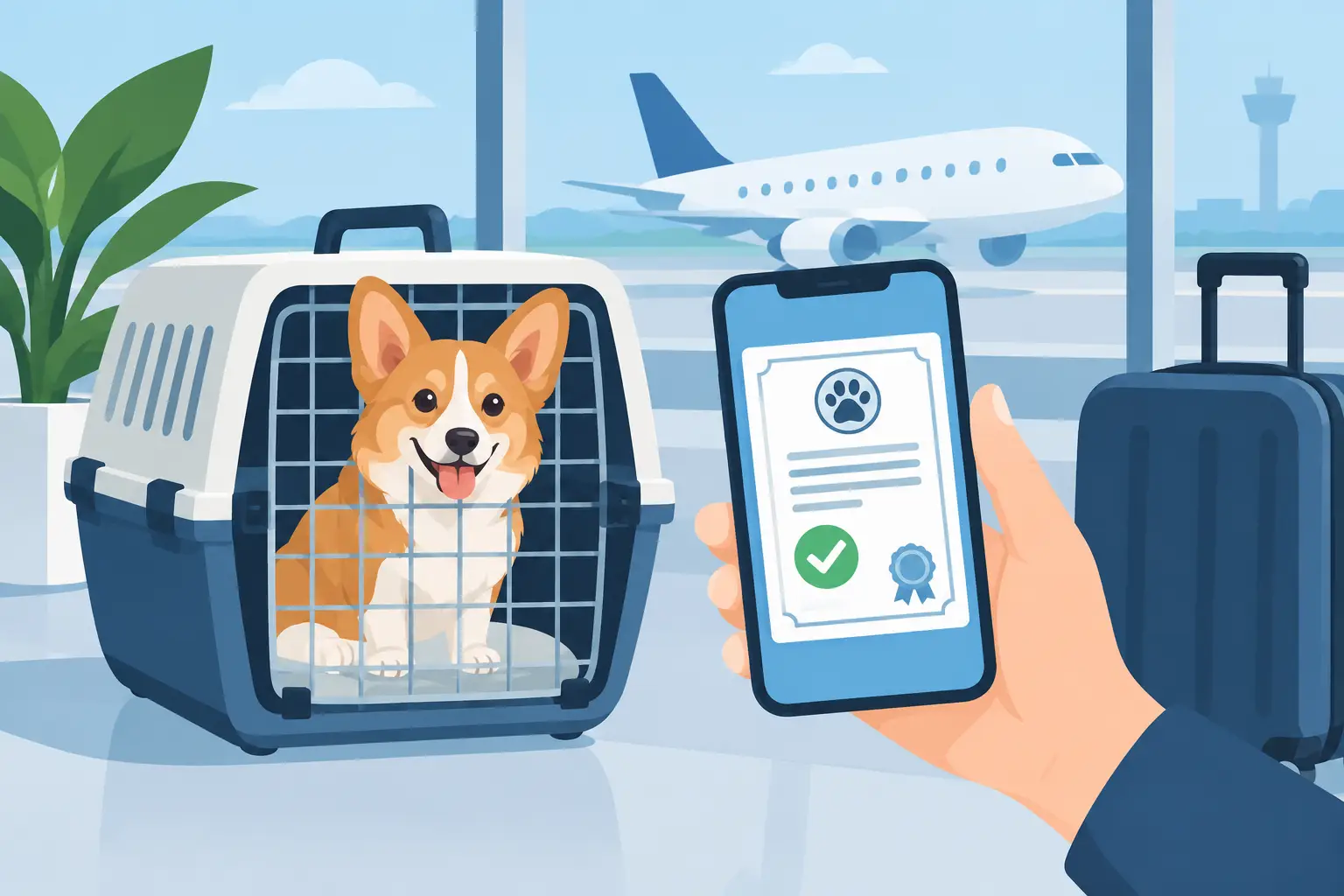
Home Appointment Versus Clinic for Pet Travel
Your Animal Health Certificate appointment is not simply another item on the pre-holiday checklist. It must happen at the right point in your travel timeline, with the right documents ready for an Official Veterinarian to check and sign. When weighing up a home appointment versus clinic appointment, the best choice is usually the one that gives you certainty without creating a last-minute rush.
For many pet owners, the decision comes down to practicalities: whether their dog or cat is comfortable travelling to a clinic, how close they are to departure, and whether they need an appointment around work, family plans or a ferry crossing. Both options can lead to the same goal – a correctly completed Animal Health Certificate (AHC) for travel from Great Britain to the EU – but the experience can feel very different.
What stays the same with either appointment type
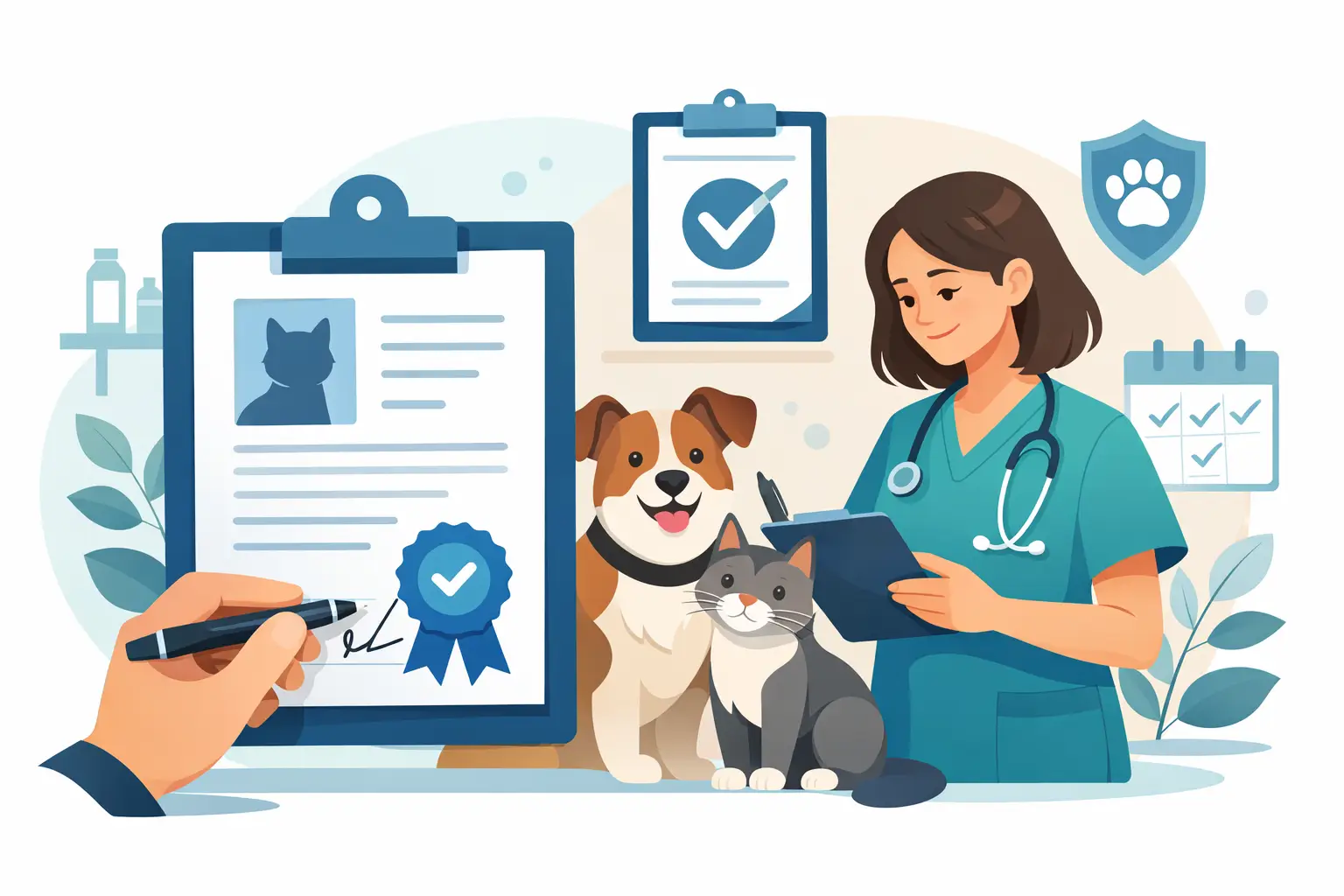
A home visit and a clinic appointment follow the same essential AHC process. Your pet must be inspected by an authorised veterinary professional, and the certificate must be signed by an Official Veterinarian. The vet will check your pet, their microchip and the information needed for the journey, including the rabies vaccination record and travel details.
The administration matters just as much as the appointment itself. AHCs contain specific information about the pet, owner, destination and intended route. Providing accurate details early allows the paperwork to be prepared before the veterinary check, rather than trying to solve missing information on the day.
Alongside checking the records and microchip, the vet will inspect your pet to check for visible signs of infectious disease. We recommend that the owner comes to the appointment with the pet, as questions and signatures can then be dealt with directly.
Timing is also the same. An AHC is normally issued no more than 10 days before entry into the EU. Booking too early may leave you with a certificate that is no longer valid when you reach the border. Booking too late can leave little room to correct an issue with travel details, vaccination history or a microchip scan.
Whether you choose to be seen at home or at a clinic, make sure your booking date works backwards from your planned EU entry date, not just the date you leave your front door. This is particularly useful for overnight ferries, long drives to the Channel, or flights that arrive after midnight.
Home appointment versus clinic: the practical differences
The certificate requirements do not change, but convenience, availability and cost can. A home appointment brings the veterinary check to you. A clinic or arranged collection-point appointment means you take your pet to the appointment location.
When a home appointment makes sense
A home visit can be the simplest choice when getting to a clinic would add stress to an already busy travel day. Some pets become anxious in waiting rooms, dislike car journeys or are unsettled by unfamiliar dogs and people. Being inspected at home gives them a familiar setting, which can make the check calmer for everyone.
It can also be particularly useful for households with more than one pet travelling. Coordinating carriers, leads, children, luggage and a strict appointment time is not always easy. With a home appointment, the pets are already where they need to be, and you can keep passports, vaccination cards and travel paperwork together on the kitchen table.
Home visits work well for owners with limited mobility, those without easy access to transport, or people managing a packed schedule before a European trip. If you are preparing for an early ferry or flight, avoiding an extra journey across town can remove one more moving part.
The trade-off is that home appointments may carry an additional travel charge and availability can depend on location and appointment demand. They are often best arranged with as much notice as possible, especially around school holidays, bank holidays and popular travel weekends.
When a clinic appointment is the better fit
A clinic or collection-point appointment can be a very efficient option if you live nearby, your pet travels comfortably and you want a lower-cost route. It may also offer more appointment choice in some areas, particularly where several appointment slots are grouped together.
For experienced pet travellers, a clinic appointment can be straightforward: submit the required details, arrive with your pet and original documentation, complete the inspection and collect the signed AHC. If the location is on your normal commute or close to your planned route out of the UK, it may be the most convenient option rather than an inconvenience.
A clinic setting is not necessarily a traditional general-practice veterinary visit. Specialist AHC services focus on the certification process, so the appointment is designed around checking and signing the travel paperwork rather than dealing with routine clinical care. That focus can help keep the process clear and time-efficient.
The main consideration is travel time. Allow for traffic, parking, your pet settling before the appointment and any unexpected delay. If you are travelling with a nervous pet, avoid booking so close to departure that a difficult journey to the clinic affects the rest of your plans.
Choose based on your deadline, not just convenience
Convenience is valuable, but your travel deadline should lead the decision. A well-located clinic appointment is often ideal when you have time to spare. A home visit may be worth the extra cost when it protects a tight schedule or avoids a complicated journey with your pet.
Start by identifying the date and approximate time you will enter the EU. Then check that your pet’s rabies vaccination is valid and that the microchip was implanted before, or on the same day as, the rabies vaccination. If it is a first rabies vaccination, a waiting period applies before travel, so do not leave this check until the week before departure.
Next, decide how much flexibility you need. Standard appointments suit most planned holidays. Repeat appointments may be appropriate for owners who have travelled before and already understand the process. If your departure is close, an urgent appointment may be the sensible choice, provided the pet’s vaccination and eligibility requirements are already in order.
A cheap appointment is only good value if it is available in the correct certification window. Equally, paying for a home appointment can be good value if it prevents time off work, a difficult trip to a clinic or the risk of missing a slot before travel.
What to prepare before the veterinary check
Whatever location you choose, preparation makes the appointment quicker and reduces the chance of delays. Have your pet’s original vaccination record or passport available, along with the microchip number, rabies vaccination details, owner information, destination country and travel date.
If more than one person is travelling with the pet, make sure the information supplied matches the person who will be responsible for the animal during the journey. Small errors in names, dates or microchip numbers can cause problems at the border, so take a few minutes to check every detail before the certificate is prepared.
Keep the original documents accessible on the appointment day. A photograph on your phone may be useful for your own records, but the Official Veterinarian needs to see the relevant original documentation. If you have received any instructions about paperwork, read them before the appointment rather than while the vet is at the door or you are waiting in reception.
Your pet should also be available and manageable for a microchip scan and inspection. For a home visit, keep cats safely indoors and have anxious dogs settled on a lead if appropriate. For a clinic appointment, bring a secure carrier for cats and smaller pets, and allow enough time to arrive calmly.
A service designed around travel paperwork
Traditional veterinary practices have to balance appointments for illness, vaccinations, surgery and emergencies. Pet travel documentation is often one service among many. A specialist process is different: you submit the travel and pet details, the administration team prepares the certificate, and the arranged veterinary professional carries out the final inspection and sign-off.
That structure can be particularly helpful when your journey has several details to coordinate, such as a ferry crossing, onward driving in Europe, a return date or more than one pet. It gives you a clearer route from booking to completed paperwork, while retaining the necessary veterinary checks.
Vet Home Certs offers this kind of focused AHC support, with standard, repeat and urgent routes as well as flexible home, delivery and collection-point arrangements. The right option is the one that fits your travel window and gives you enough time to leave Great Britain with the completed certificate in hand.
If a home visit will make your pet calmer and your preparations easier, it can be a practical investment. If a nearby clinic slot gets you certified efficiently at a lower cost, that may be the better route. Choose early, check your dates carefully and give the paperwork the same attention you give to your tickets – your pet’s European journey depends on both.