Can Pets Travel Without Owners? UK Rules
A pet arriving at check-in with the wrong paperwork can turn a carefully planned European trip into a very expensive problem. So, can pets travel without owners? Yes, in some circumstances – but the person travelling with your dog, cat or other eligible pet must be properly authorised, and the journey must meet the rules for non-commercial pet travel.
For travel from Great Britain to the EU, the details matter. Who accompanies the pet, when the owner travels, what is written on the Animal Health Certificate (AHC), and whether the pet meets vaccination requirements can all affect whether the journey is accepted. The good news is that travelling separately does not automatically mean your pet cannot go.
Can pets travel without owners to the EU?
Your pet does not always need to be physically beside you for the whole journey. Under the usual non-commercial pet travel rules, a pet can travel with an authorised person instead of its owner. This may be a family member, friend, professional driver or other trusted companion.
The key point is that the pet’s travel must still be connected to the owner’s own journey. In general, the owner and pet must travel within five days of one another. That may mean your pet travels ahead of you, follows shortly afterwards, or travels on the same date with someone else.
The person accompanying the pet should have written authorisation from the owner. This makes clear that they have permission to travel with the animal and supports the information recorded on the AHC. Keep it simple, but make it clear: identify the owner, authorised person, pet, travel dates and intended journey.
If the pet travels more than five days before or after the owner, or the movement is connected with selling, transferring ownership or rehoming, the journey may fall under commercial movement rules instead. Those rules are different and can involve additional health certification, advance notifications and border procedures. Do not assume a standard AHC will cover this type of travel.
The pet cannot travel completely unattended
There is an important difference between travelling without the owner and travelling without a person. Your pet must be accompanied by an authorised person for a non-commercial movement. A dog cannot simply be booked onto a ferry, train or flight alone under the standard pet travel process.
Some airlines and specialist animal transport providers can arrange animal carriage, including travel in the hold or as cargo. However, their carrier rules are separate from the legal entry requirements. A carrier may have restrictions on breeds, crate sizes, temperatures, connecting flights and the age of the animal. It may also require its own booking documents.
For many owners, a trusted person travelling with the pet by car, ferry or rail is the most straightforward option. It is usually easier to keep the pet comfortable, present original documentation when asked, and deal with any unexpected changes to timings.
What paperwork does an authorised traveller need?
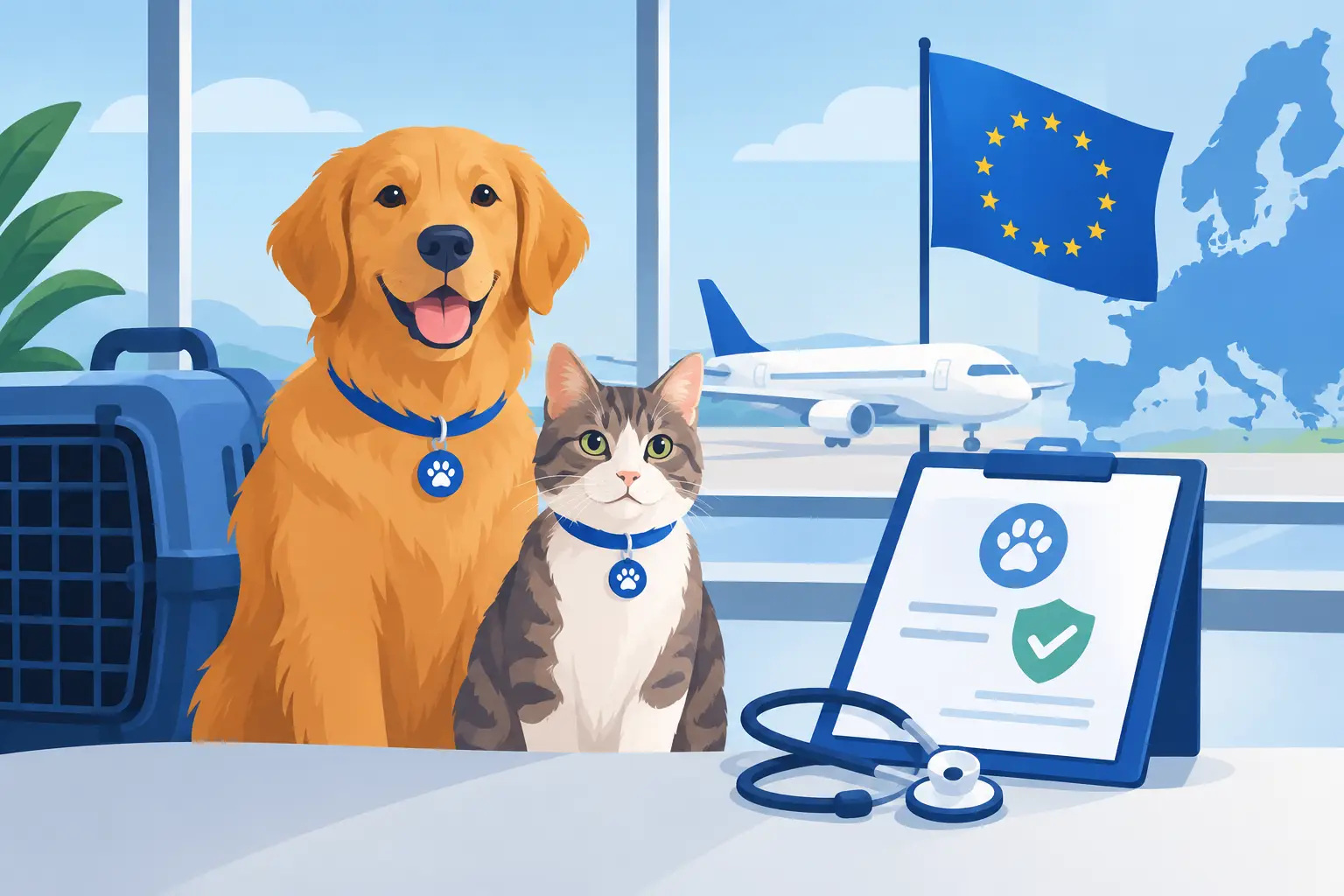
For a dog, cat or ferret travelling from Great Britain to an EU country, the original Animal Health Certificate normally travels with the pet. It is not enough for the owner to hold the paperwork at home or to send a photo of it by phone.
The authorised traveller should carry the completed AHC, the owner’s written authorisation and any carrier booking information. They should also know the pet’s microchip number and the owner’s contact details. Border staff may check that the pet described in the certificate is the pet being presented.
Before an AHC can be issued, the pet will need to meet the relevant conditions. These commonly include:
- a readable microchip, fitted before the rabies vaccination
- a valid rabies vaccination, with the required waiting period completed for a first vaccination
- an AHC issued by an Official Veterinarian no more than 10 days before entry into the EU
- tapeworm treatment for dogs where required, given within the correct time window before entry
- correctly prepared information for the owner, pet, destination and authorised person
A first rabies vaccination usually requires a 21-day wait before travel. This catches out owners who book a holiday first and check the pet’s records later. A booster can remain valid without a new waiting period if it is given before the previous vaccination expires. Your pet’s vaccination record needs to be checked carefully rather than guessed from the date on a reminder message.
Dogs travelling directly to certain destinations, including Ireland, Finland, Malta, Norway and Northern Ireland, may need tapeworm treatment one to five days before entry. The treatment must be recorded correctly by a vet. The precise destination and route therefore need to be confirmed when the paperwork is prepared.
Plan around the five-day rule and the certificate window
When owners and pets are travelling separately, dates are the first thing to map out. Start with the pet’s planned arrival in the EU, then work backwards. The AHC needs to be issued within 10 days of EU entry, and the owner must normally travel within five days of the pet.
For example, if your sister drives your dog to France on a Saturday, you could travel on the Thursday before, the same Saturday, or up to the following Thursday, provided the journey otherwise meets the non-commercial requirements. The dates recorded in the paperwork must match the real travel plan.
Avoid booking the veterinary appointment too early simply to get it off your list. An AHC issued outside the 10-day entry window will not be valid for that first EU entry. Equally, leaving it until the last minute gives little room to correct a misspelt name, missing vaccination detail or changed ferry crossing.
An AHC is generally valid for onward travel within the EU for four months from the date of issue, as well as return to Great Britain during that period, provided the conditions remain met. This can be helpful for a longer holiday or a trip involving several EU countries. It does not remove the need to meet any country-specific requirements on your route.
How to make separate pet travel less stressful
Choose an authorised traveller who is comfortable handling your pet and the practical side of the journey. They should know the feeding plan, medication routine, emergency contact details and how your pet responds to busy environments. For a nervous animal, a familiar person and a calm road route can be kinder than a complicated flight with several handovers.
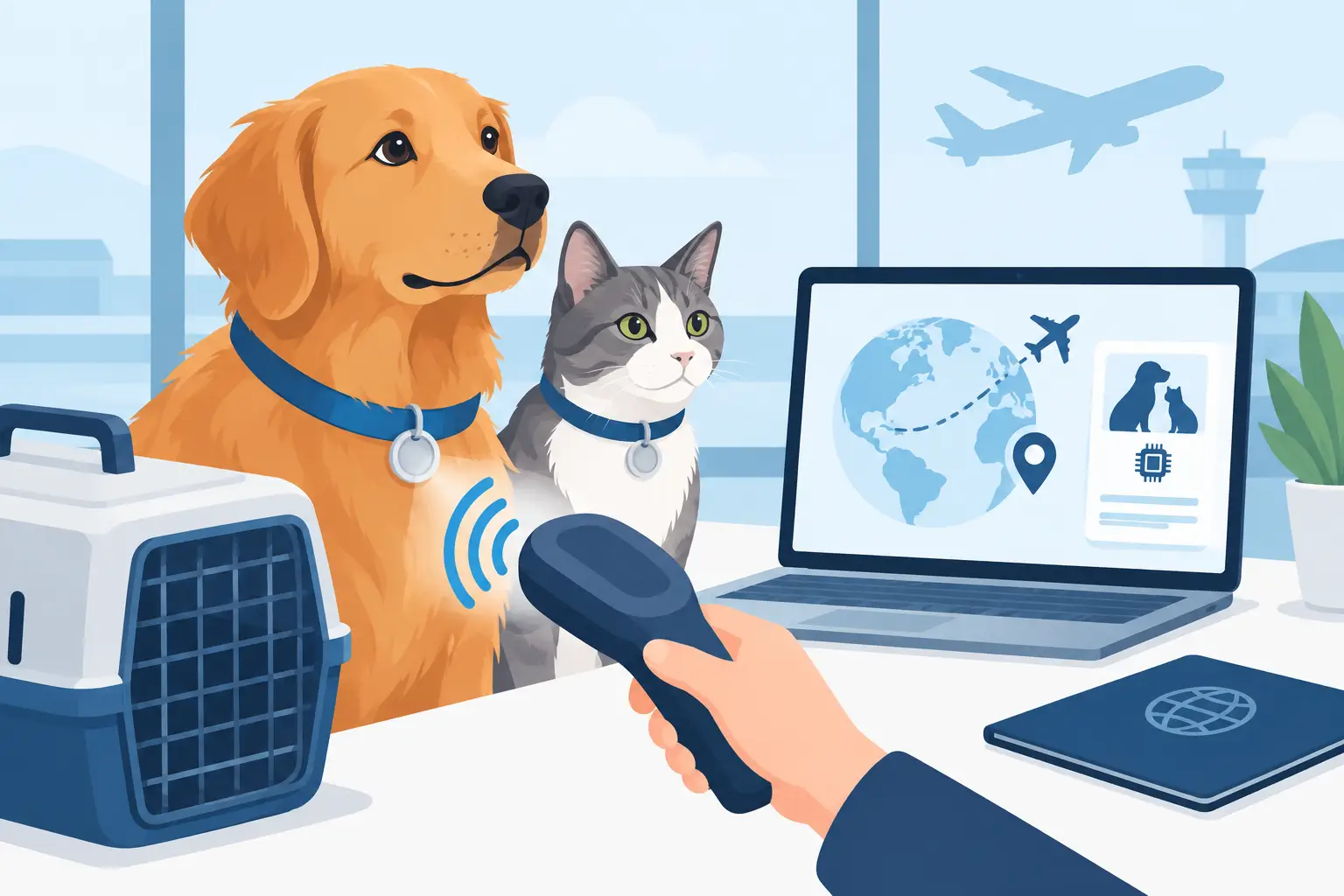
Give the traveller a physical document pack, not just screenshots. Keep the AHC protected but easy to reach, alongside written authority and copies of key booking details. Make sure the microchip can be scanned before departure, and check that the contact number linked to the microchip record is current.
It is also sensible to confirm the carrier’s pet policy directly before travel. Ferry, airline and train arrangements can vary sharply, even when the legal paperwork is correct. A valid certificate does not guarantee that a carrier will accept a pet in a particular cabin, vehicle or service.
Getting the AHC arranged for an authorised journey
When you book an AHC, say early on that someone else will be travelling with the pet. This allows the administration team and Official Veterinarian to prepare the certificate with the right information and arrange the examination at a time that fits your EU entry date.
Vet Home Certs helps owners turn this into a clear sequence: submit the pet and travel details, have the documentation prepared, attend the veterinary check, then travel with the completed certificate. Standard, repeat and urgent appointment options can make a real difference when a ferry date is close or plans have changed.
Separate travel can be perfectly manageable when the owner-pet timing, written authorisation and original certificate all line up. Give yourself enough time to check the details, and your pet can set off with a trusted companion while you focus on meeting them at the other end.