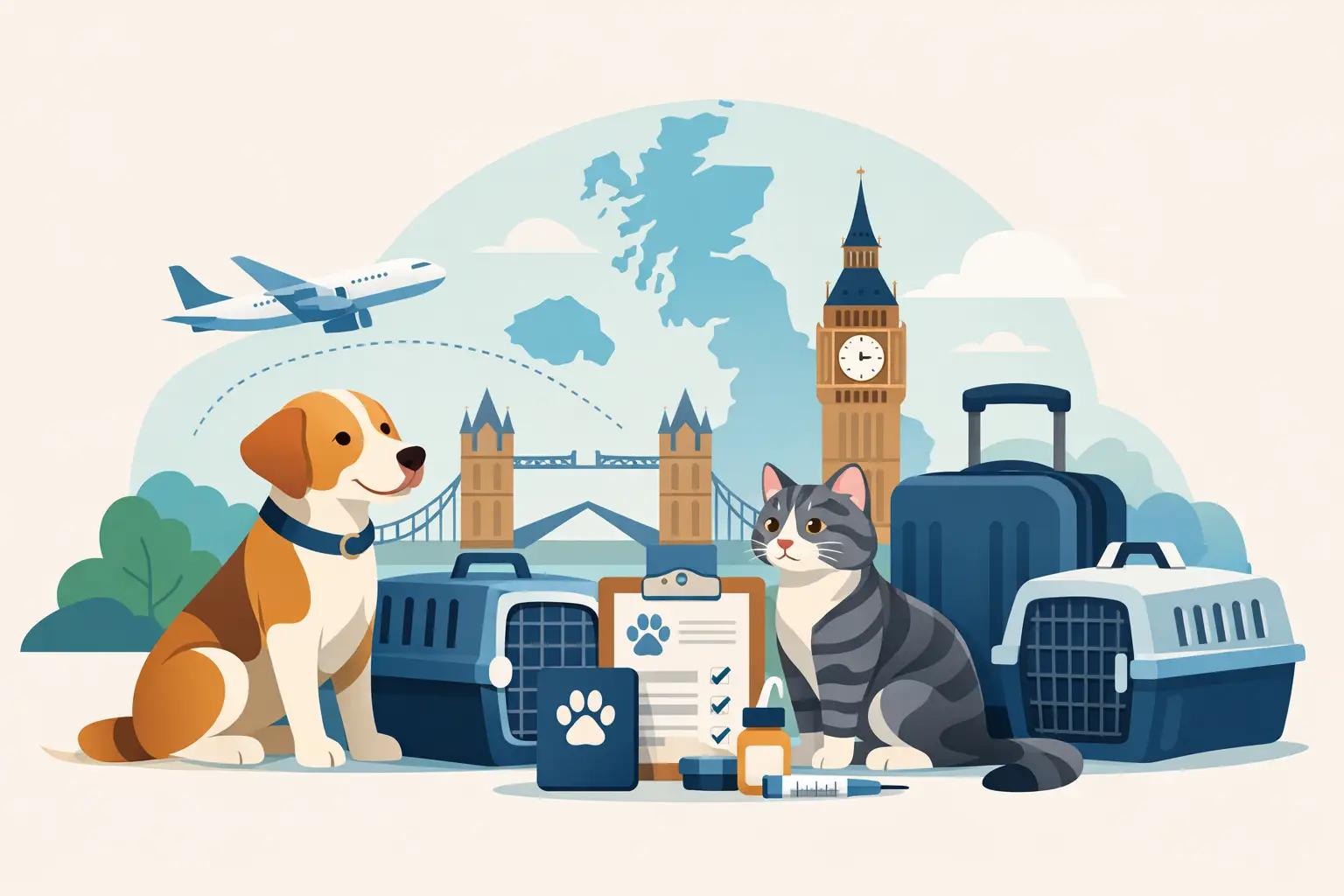
How to Avoid AHC Application Errors Before Travel
A ferry or flight booking can be changed in minutes. An Animal Health Certificate cannot. To avoid AHC application errors, treat the information you submit as the basis for a legal travel document, not a rough outline of your trip. A missed digit in a microchip number, an out-of-date rabies vaccination or the wrong travel date can create a problem when time is already tight.
The good news is that most issues are preventable. With the right documents, accurate travel information and an appointment booked at the right point in your countdown, the process is straightforward: submit your details, have the paperwork prepared, attend the veterinary check and travel with the completed certificate.
Start with the microchip and rabies record
For most pets travelling from Great Britain to the EU, the microchip and rabies vaccination record are the first things to check. Your pet must be microchipped before, or at the same time as, its rabies vaccination. If the vaccination was given before the chip was implanted, it will not support the journey and a new vaccination may be needed.
Read the microchip number directly from the vaccination record and compare it with the number shown on any previous travel paperwork. Do not rely on a saved note, a photo that is hard to read or memory. One incorrect character can mean the record does not match the chip scanned at the appointment.
At the appointment, the vet will inspect your pet for signs of infectious disease before completing the AHC. If possible, book a slot that the owner can attend: it makes confirming the details and signing the documents easier.
Rabies dates need the same care. A first rabies vaccination normally requires a 21-day wait before EU travel. A booster can avoid that wait only where it has been given before the previous vaccination expired, maintaining continuous cover. If there has been a gap, it may be treated as a new primary vaccination. The veterinary professional signing the AHC must work from the documentation available, so check the dates early rather than assuming an old rabies certificate remains valid.
Get the timing right
An AHC is issued within 10 days of entering the EU. That makes booking too far ahead just as unhelpful as booking at the last minute. Your appointment needs to fall in the correct window for your planned arrival in the EU, not simply the day you leave home.
For example, if you are taking an overnight ferry and arrive in France the following morning, it is the arrival date that matters when working back from the 10-day window. If you are flying via another country or beginning a road journey after a crossing, provide the date and location of your first EU entry.
Once issued, an AHC is generally valid for entry into the EU for 10 days, then for onward travel within the EU and return to Great Britain for up to six months. That does not mean every trip fits neatly into six months, or that separate carrier requirements disappear. Longer stays, repeat journeys and complex routes may need a different plan, so share the full itinerary before paperwork is prepared.
Do not use estimated travel details
A common cause of delay is an application submitted with provisional details: “France, probably Friday”, “morning crossing” or “Eurotunnel or ferry”. Those details may be enough to start thinking about the trip, but they are not ideal for a certificate application.
Provide the first EU country you will enter, your intended date of entry, your departure point where known and the method of travel. If you are driving through several countries, include the route and your final destination. If plans genuinely change after your paperwork has been prepared, tell the administration team immediately. Whether the AHC needs amending or reissuing depends on what changed and when.
Use the pet owner’s details exactly as they appear in the documents
The named person on the certificate matters. The owner’s name, address and contact information should be entered carefully and consistently. Use your full legal name rather than a nickname, and make sure the address matches the information you provide for the application.
This is especially relevant when one family member books the trip, another takes the pet to the appointment and a third person is travelling. Explain the arrangement at the outset. A pet can travel with an authorised person in certain circumstances, but the details and supporting declarations need to be handled correctly. Do not assume that being related, sharing an address or carrying the booking confirmation automatically resolves the issue.
For travel with someone other than the owner, the accompanying person must be authorised by the owner. You must show the vet proof that the owner’s journey takes place no more than five days before or after the pet travels. The required authorisation template is available to download in Stage 2, in the language of the first country your pet will enter. An authorised person coming to the appointment without the owner must bring the owner-signed letter; when the owner attends, the vet brings the letter for them to sign. Let us know who will attend and sign the AHC: this can be the owner or the authorised person who will accompany the pet.
The same applies if your pet is travelling for a change of ownership, sale or commercial purpose. The standard non-commercial pet travel route may not apply. Raise this before booking so the correct requirements can be considered rather than discovering a mismatch close to departure.
Send clear, complete documents the first time
Blurry photos and cropped vaccine pages are a quiet source of AHC application errors. They create back-and-forth at the point when everyone is trying to meet a fixed deadline. Photograph or scan each relevant page in good light, ensuring that dates, veterinary stamps, signatures, product details and the whole microchip number can be read.
Have the original vaccination record available for the veterinary appointment. Digital images allow the paperwork to be checked and prepared, but the Official Veterinarian needs to see the appropriate original evidence before signing. Keep documents together in a safe place from the moment you apply.
Check that the pet’s species, breed, sex, date of birth and colour are described consistently where those details appear. Minor differences are not always fatal, but they are worth flagging rather than hoping they will be ignored. It is much easier to clarify a discrepancy before a certificate is produced.
Remember country-specific requirements
EU entry requirements are not the only consideration. Dogs travelling to certain destinations, including Finland, Ireland, Malta and Norway, may need tapeworm treatment recorded within the required timeframe before entry. The treatment must be administered and documented correctly by a vet, so it cannot be left until after you have arrived.
Your carrier may also have its own rules on check-in, pet containers, permitted routes or document presentation. Airlines in particular can have requirements that sit alongside the AHC. Check those separately, then make sure the appointment timing works for both the certificate and the journey.
If you are travelling with more than five pets, have an unusual itinerary, are heading to a non-EU country after the EU, or are returning by a different route, mention it from the beginning. These are not reasons to panic. They are reasons not to use a standard application without checking whether it fits.
Choose an appointment that gives you room to act
A cheap appointment is not good value if it leaves no time to deal with a missing record or a changed crossing. Book as soon as your travel dates and rabies status are clear, particularly for school holidays, summer weekends and peak ferry periods. A standard appointment may be suitable when your documents are in order and your travel date is comfortably ahead. Urgent options are useful when time is short, but they cannot overcome a rabies waiting period or missing evidence.
Think about practical collection too. A home visit, collection point or arranged delivery can make sense depending on your location, working hours and departure plan. The right option is the one that gives you a completed AHC in hand before you set off, without adding an unnecessary detour on the busiest day of the trip.
Vet Home Certs is designed around this sequence: the administration team collects and checks the information, paperwork is prepared in advance, and an independent veterinary surgeon or Official Veterinarian completes the inspection and sign-off. That structure helps keep the appointment focused on the checks that must happen in person.
A final check before you leave
When you receive the completed AHC, look through it before departure. Confirm your name, your pet’s microchip number, the rabies details, the issuing date and the first EU entry information. Carry the original certificate and vaccination evidence as advised, keeping them accessible rather than buried in the boot under holiday luggage.
The best time to solve an AHC issue is before the certificate is signed, not at a port, airport or check-in desk. Give yourself enough notice, submit what is written in your documents rather than what you think they say, and ask about anything that does not look right. That small amount of care can leave you free to focus on the far better part of the journey: getting your pet safely to the holiday with you.