What Do I Need for an AHC? UK Pet Travel
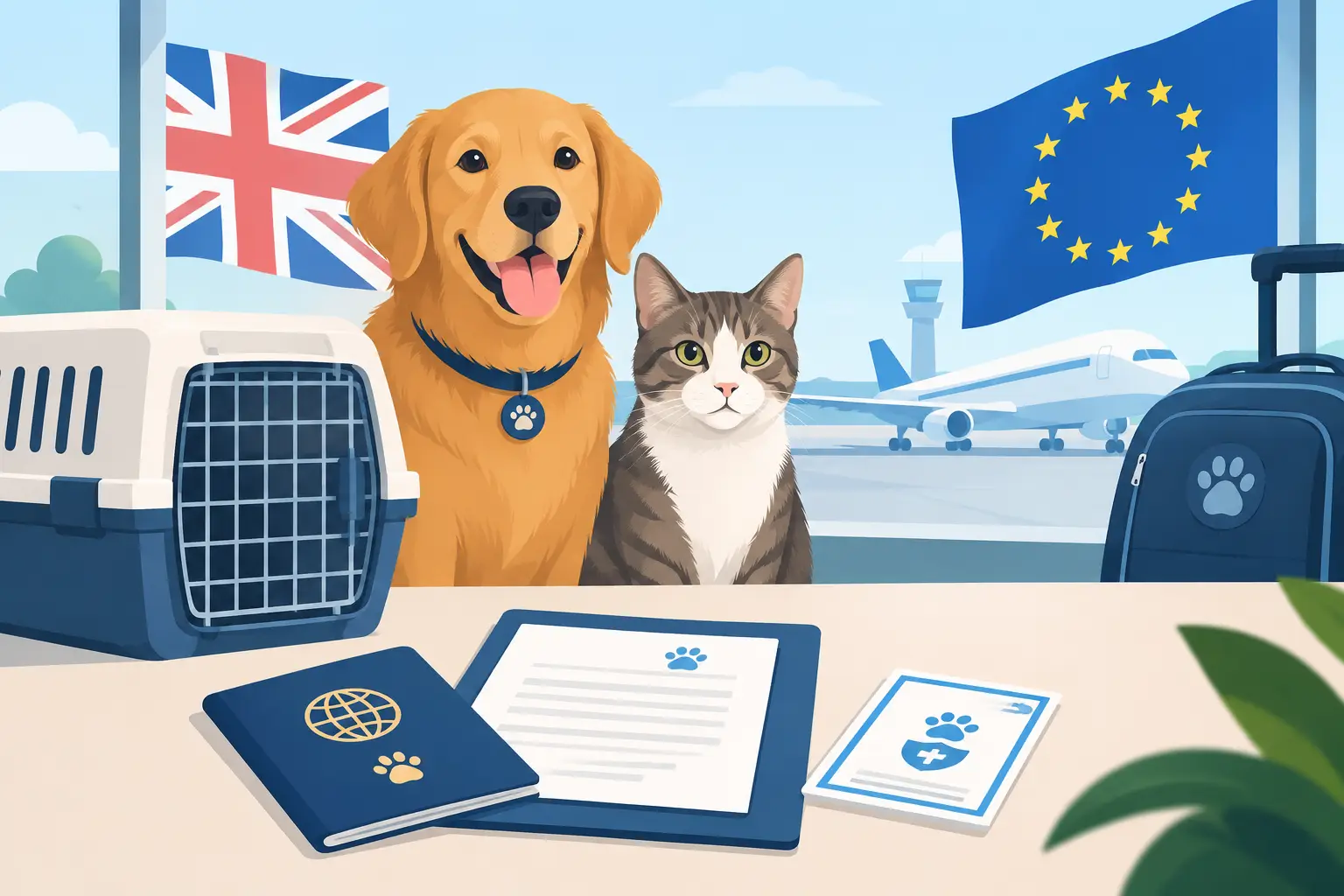
Your ferry, flight or Eurotunnel booking may be confirmed, but your pet cannot travel on booking details alone. If you are asking, “what do I need for an AHC?”, the answer comes down to four things: an eligible pet, the right health history, accurate journey information and an appointment at the correct time.
An Animal Health Certificate is the document most pets need when travelling from Great Britain to the EU or Northern Ireland. It is issued by an Official Veterinarian after they have checked your pet and the supporting information. The process is straightforward when you prepare early, but the timing rules are strict enough that leaving it until the last minute can create unnecessary pressure.
What do I need for an AHC?
For a standard trip with a dog, cat or ferret, you will normally need your pet’s microchip details, rabies vaccination evidence, owner details, destination and travel date. You will also need to bring your pet to the arranged appointment so the Official Veterinarian can scan the chip, complete the required checks and sign the certificate.
The certificate must be issued no more than 10 days before you enter the EU. This is why your outward travel date is one of the first details needed when arranging an appointment. It determines the window in which the final veterinary check and sign-off can take place.
Your pet must be microchipped
Your dog, cat or ferret needs a readable microchip. The microchip must have been fitted before the rabies vaccination being used for travel. If the vaccination was given before microchipping, it cannot support an AHC, even if the vaccine itself has not expired.
Check the number on your pet’s vaccination record carefully before booking. A single incorrect digit on paperwork can cause delays, and the number scanned at the appointment must match the record used to prepare the certificate.
Alongside checking the records and microchip, the vet will inspect your pet to check for visible signs of infectious disease. Owner attendance is encouraged wherever possible so the vet can confirm the details and arrange the signatures directly.
You need a valid rabies vaccination record
For most pet owners, rabies vaccination timing is the detail that matters most. Your pet must have a valid rabies vaccination recorded against its microchip number.
If it is your pet’s first rabies vaccination, or there has been a break in vaccine continuity, you must wait 21 clear days after the vaccination date before you can receive your AHC and enter the EU. For example, a rabies vaccine given on 1 June permits the AHC to be issued and EU entry from 22 June. An AHC cannot override that waiting period.
If your pet has had continuous boosters, a new 21-day wait is usually not required. However, the previous vaccination must still have been valid when the booster was given. Bring or provide the relevant vaccination records so the administration team and Official Veterinarian can confirm the dates.
Pets must generally be at least 12 weeks old to receive a rabies vaccination. With the 21-day wait added, very young puppies, kittens and ferrets will not usually be ready for travel as soon as owners expect.
Details needed to prepare your certificate
The veterinary appointment is the final stage, not the beginning of the paperwork. Preparing your information in advance helps ensure the certificate reflects your journey exactly and leaves the Official Veterinarian free to complete the required inspection and sign-off.
You will be asked for the owner’s full name and address, plus a contact number and email address. If somebody else is taking the pet abroad, their details may also be needed. The rules distinguish between an owner travelling with their pet and an authorised person travelling on the owner’s behalf, so be clear about who will make the journey.
An authorised person can accompany your pet when the owner is travelling separately; arrange this with us beforehand. The vet must see proof that the owner will travel within five days before or after the pet. The required authorisation template is available to download in Stage 2, in the language of the first country your pet will enter. An authorised person coming to the appointment without the owner must bring the owner-signed letter; when the owner attends, the vet brings the letter for them to sign. Either the owner or the authorised person travelling with the pet may sign the AHC at the appointment; please confirm who will sign beforehand.
You will also need to provide the country where you will first enter the EU or Northern Ireland, your final destination, your intended date of entry and your transport plans. This does not mean every stop on a road trip needs to become complicated. It means the certificate must make sense for the route you are actually taking.
A clear photo or scan of the rabies vaccination page is often helpful when paperwork is being prepared. Make sure all dates, vaccine details, the microchip number and the vet’s entry are visible. Blurry images and cropped pages are among the easiest problems to avoid.
Is your journey non-commercial?
Most holidays, family visits and trips to a second home are non-commercial movements. In simple terms, the pet is travelling with you, or with someone authorised by you, and is not being sold or transferred to a new owner.
There is normally a limit of five pets travelling under the non-commercial rules. Different arrangements can apply where more than five pets are travelling for a competition, show or sporting event, or where the journey is commercial. If your plans involve breeding, selling, rehoming, transporting animals for someone else or a larger group of pets, raise this before booking. The correct documentation may not be a standard AHC.
Extra requirement for some dog journeys
Dogs travelling directly to Finland, Ireland, Malta, Norway or Northern Ireland need treatment for tapeworm before entry. The treatment must be given by a vet between 24 and 120 hours before arrival, and it must be recorded correctly.
This requirement is based on your planned arrival time, not simply the day you leave home. If you are taking an overnight ferry or making several stops, work backwards from the point at which you expect to enter the destination country. Your AHC appointment and tapeworm treatment may be arranged together where the timing allows, but they are not always on the same day.
Please note there is a government excemption certificate for entering Northern Ireland, however if you plan to travel into Ireland you still require an AHC.
There is no equivalent tapeworm treatment requirement for cats and ferrets. It is one of the reasons it is useful to provide your exact species and destination when arranging the paperwork.
What to bring to the AHC appointment
Bring your pet and the original rabies vaccination record or passport containing the relevant vaccination history. Your pet needs to be present because the Official Veterinarian must scan the microchip and carry out the required checks before issuing the certificate.
It is also sensible to have your travel confirmation and any details supplied during booking available on your mobile phone. If a date, spelling or route has changed since you submitted your form, tell the team before the certificate is completed. Once an AHC has been issued, changes can be difficult and may require replacement paperwork.
Keep the appointment calm for your pet. A lead, carrier, treats and a little extra time can make a practical difference, especially for nervous animals. The clinical element is usually quick, provided the paperwork and vaccination history are in order.
Choosing the right appointment timing
The best appointment date depends on when you will first enter the EU or Northern Ireland. Because the AHC has a 10-day issue window, booking too early can make the certificate invalid before your journey begins. Booking too late leaves little room to resolve missing information or vaccination questions.
For a straightforward journey, arranging the appointment several days before departure is often a sensible balance. For urgent travel, it may still be possible to organise an appointment if the rabies and microchip requirements are already met, but availability and service options can vary.
Once issued, an AHC is generally valid for onward travel within the EU and Northern Ireland, and for return to Great Britain, for six months from the date of issue or until the rabies vaccination expires, whichever is earlier. It is not a long-term replacement for repeat travel paperwork. If you make several separate trips in a year, you will usually need a new AHC for each one.
Make the process easier before you book
Before arranging your certificate, put the travel date, destination, microchip number and rabies record in one place. Then check whether your dog needs tapeworm treatment and whether anyone other than the owner will travel with the pet. Those few checks answer most of the questions that can otherwise slow down an application.
Vet Home Certs is designed to handle the administrative side first, then coordinate the final inspection and Official Veterinarian sign-off in the right travel window. Whether you need a standard, repeat or urgent appointment, accurate information at the start gives you the best chance of a calm, compliant departure.
Your pet’s AHC should be one task on the travel list, not the reason the whole journey feels uncertain. Gather the records early, book for the right date and leave yourself enough time to travel with confidence.