Microchip Travel Questions Answered for Pet Owners
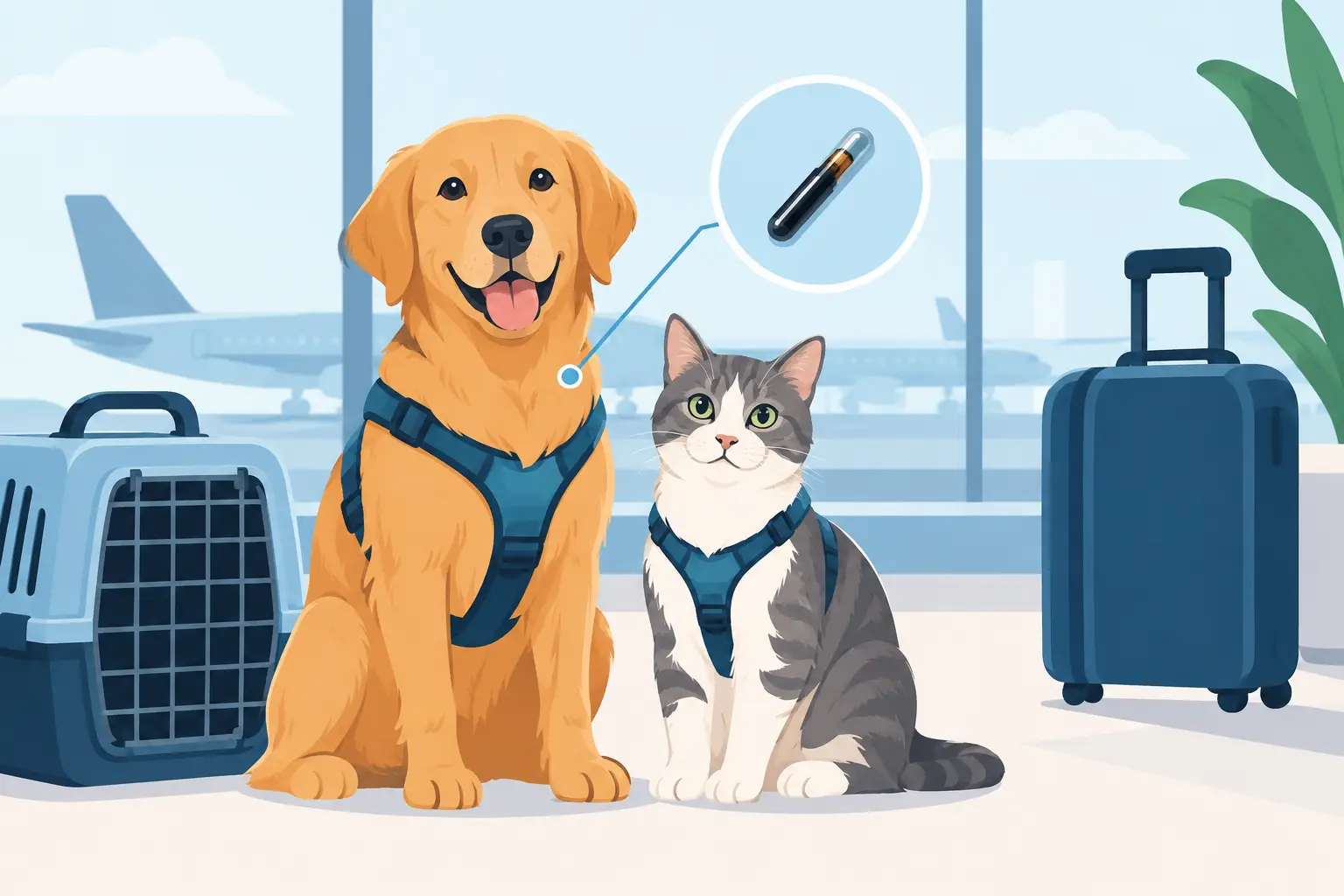
A pet’s microchip is a tiny detail with a major role in European travel. Most microchip travel questions come down to one concern: will the number on your pet’s record match the number checked at the border? Getting that answer right before arranging an Animal Health Certificate (AHC) can prevent a stressful delay, a rejected certificate or a disrupted journey.
For dogs, cats and ferrets travelling from Great Britain to the EU, the microchip is the starting point for the travel process. It links your pet to their rabies vaccination and to the details recorded on the AHC. That is why checking it early is one of the simplest ways to make travel paperwork easier.
Why does my pet need a microchip to travel to the EU?
EU pet travel rules require dogs, cats and ferrets to be microchipped. The chip provides a unique identification number which an Official Veterinarian can scan during the appointment. That number is then recorded on the Animal Health Certificate alongside your pet’s description, rabies vaccination details and travel information.
It is not enough for a pet to have a chip fitted at some point in the past. The number must be readable, and it must match the paperwork exactly. A single incorrect digit can create a problem, particularly when the rabies vaccination record and the chip record do not agree.
The chip should meet the recognised ISO standard used for pet identification. Most pets microchipped in the UK will have a suitable chip, but it is sensible to have it scanned if you are unsure, if your pet was chipped abroad, or if the chip was fitted many years ago.
Microchip travel questions to resolve before booking
The best time to check travel details is before you choose your appointment type and certainly before the final days before departure. AHCs must be issued within the required timeframe before entry to the EU, so discovering a chip or vaccine issue at the last minute leaves less room to put things right.
Does the microchip number match the rabies certificate?
Find the original rabies vaccination certificate or previous pet travel paperwork and compare its microchip number with any registration documents you hold. Check every digit. Do not rely on a number saved in a phone note or copied into an old form, as transcription errors do happen.
At the AHC appointment, the veterinary surgeon will scan your pet and check the number against the submitted information and vaccination evidence. If the number is different, the certificate cannot simply be completed using the preferred number. The documentation needs to reflect the chip that is actually present in your pet.
Was the microchip fitted before the rabies vaccination?
This is one of the most significant questions. For an initial rabies vaccination to support EU travel, the pet must have been microchipped before, or on the same day as, the rabies vaccine was given. The dates on the records matter.
If the rabies vaccine predates the microchip, that vaccination will not normally be valid for pet travel. Your pet may need a new rabies vaccination after the chip has been fitted, followed by the required waiting period before travel. This can affect travel plans, so raise it as soon as possible rather than assuming a current vaccine sticker is enough.
Is the rabies vaccination still valid?
A valid rabies vaccination is not just about the expiry date. For a first rabies vaccination, pets must wait 21 clear days before entering the EU. A booster given while the previous vaccination remains valid does not usually restart that waiting period.
The vaccination record should show the date of vaccination, the product details and the valid-until date, as well as the microchip number. If a booster was late, it may be treated as a new primary vaccination for travel purposes. This is where timing can make the difference between travelling as planned and needing to change the date.
What if my pet’s microchip cannot be found?
Occasionally, a chip can migrate slightly from the original implantation site, which is why a careful scan matters. In other cases, it may have failed or cannot be detected. A vet can check properly and advise on the next step.
If a new chip is needed, do not assume existing rabies paperwork will automatically transfer to it. The relationship between chip date and rabies vaccination date must still meet travel rules. A replacement chip may therefore mean new vaccination steps and a new waiting period. It is inconvenient, but resolving it well ahead of travel is far easier than finding out at the port or airport.
What details should I provide for an Animal Health Certificate?
An AHC is time-sensitive paperwork, but preparation should start earlier than the appointment itself. You will normally need your pet’s correct microchip number, rabies vaccination evidence, destination, date of travel, route and owner details. If someone else is travelling with your pet, or within the permitted period after you, that also needs to be considered when preparing the certificate.
Clear photographs or scans of vaccination documents help the administration team review the information before the veterinary check. Make sure the full page is visible, not just the vaccine label. The microchip number, vaccination date and veterinary entries need to be legible.
Vet Home Certs is designed around this practical sequence: submit the required pet and travel information, allow the paperwork to be prepared, attend the arranged veterinary examination and receive the completed AHC once the Official Veterinarian is satisfied. For repeat travellers, keeping clear copies of each rabies record and certificate can make the next booking quicker.
When should I arrange the chip check and AHC?
Think of these as two separate deadlines. The chip and rabies history should be checked as early as you can, ideally when you first start planning the trip. The AHC itself must be completed close enough to travel to meet EU entry rules, rather than months in advance.
If your pet has a straightforward, current rabies record and a readable chip, arranging the certificate appointment in good time is usually a simple administrative job. If you have a new pet, an unclear vaccination history, a lapsed rabies booster or an overseas vaccination record, allow more time. The right option may depend on whether you need a standard, repeat or urgent appointment.
It is also worth considering the realities of your route. A ferry crossing, a long drive through several countries and an early-morning flight all create different pressures. Build enough time into your plan to collect documents, check your pet’s chip and review the certificate before setting off.
Common mistakes that cause avoidable stress
The most common error is assuming a microchip registration database entry is the same thing as compliant travel evidence. Database details are useful for ownership and contact purposes, but border travel depends on the chip in your pet matching the vaccination record and AHC.
Another mistake is overlooking a typo on an old rabies certificate. If the chip number was entered incorrectly at the time of vaccination, it needs professional attention before an AHC can be issued. Similarly, a pet can look well and have a current annual health check while still not meeting the separate documentation requirements for travel.
Finally, do not leave the microchip check until the AHC appointment if you have any doubts. A quick scan at your usual vet well before your journey can give you certainty. If something needs correcting, you will have options rather than a last-minute problem.
Your pet cannot explain a missing number or a confusing vaccine date at check-in. A few minutes spent confirming the microchip, rabies history and travel details now gives you the calmest possible start to your European journey.